Table of Contents
The nose is one of the most defining features of the face. Positioned at the center, it plays a crucial role in facial harmony, balance, and overall appearance. Even minor changes to the shape, size, or structure of the nose can significantly enhance facial aesthetics and improve self-confidence.
Many individuals feel self-conscious about certain aspects of their nose, such as a prominent hump, a broad nasal bridge, a drooping tip, asymmetry, or breathing difficulties caused by structural abnormalities. Fortunately, modern cosmetic surgery offers effective solutions to address these concerns through Rhinoplasty, commonly known as a “nose job.”
Rhinoplasty is one of the most popular facial cosmetic procedures worldwide because it can improve both the appearance and function of the nose. Whether your goal is to refine facial features, correct a congenital issue, repair damage from an injury, or improve breathing, rhinoplasty can be a transformative procedure when performed by experienced specialists.
In this comprehensive guide, I will explain what rhinoplasty is, who may benefit from it, the different types of procedures available, the recovery process, expected results, risks, and frequently asked questions.
What is Rhinoplasty?
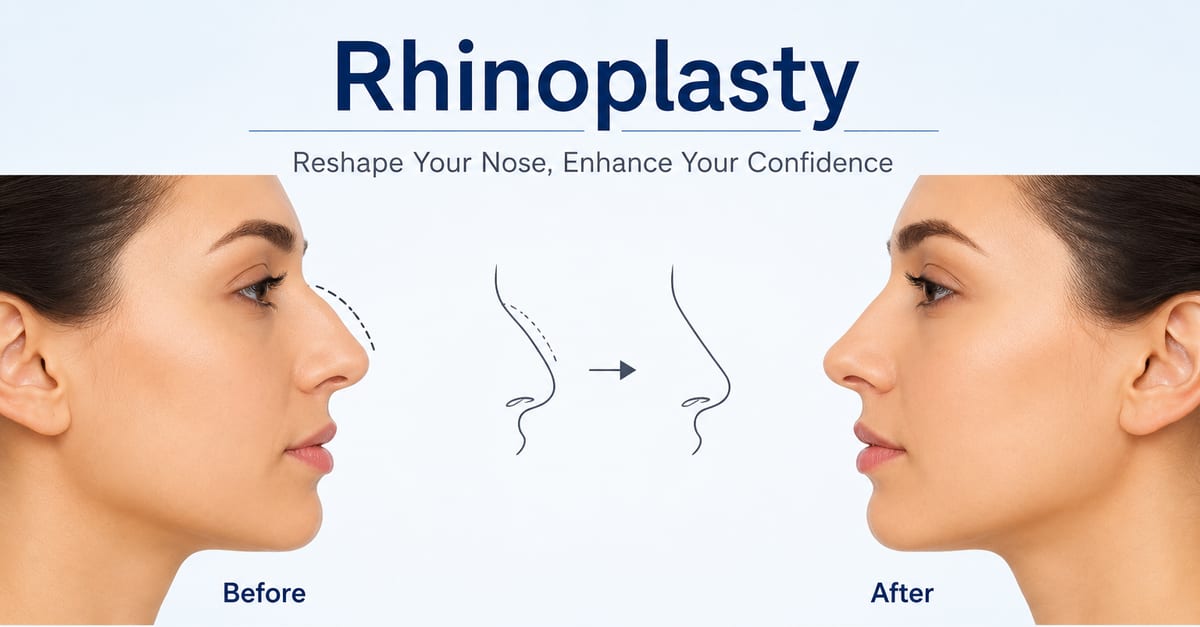
Rhinoplasty is a surgical procedure designed to reshape, resize, or reconstruct the nose. The procedure can modify the bone, cartilage, skin, or a combination of these structures to achieve the desired result.
Rhinoplasty may be performed for:
- Cosmetic enhancement
- Functional improvement
- Correction of birth defects
- Repair after trauma or injury
- Revision of a previous rhinoplasty
The primary goal is to create a nose that complements the patient’s facial features while preserving or improving nasal function.
A successful rhinoplasty should not make the nose look artificial or “operated upon.” Instead, the result should appear natural and balanced with the rest of the face.
Why Do People Choose Rhinoplasty?
Every patient’s motivation is unique. Some seek rhinoplasty for aesthetic reasons, while others require functional correction.
Common concerns include:
A Prominent Nasal Hump
A bump on the bridge of the nose can make the profile appear more pronounced.
Wide Nose
Some individuals wish to narrow the nasal bridge or nostrils for better facial balance.
Bulbous Nasal Tip
A rounded or enlarged tip can be refined for a more defined appearance.
Drooping Nasal Tip
The tip may point downward, particularly when smiling.
Crooked Nose
A deviated nose can result from genetics or injury.
Large Nose
Patients may desire overall reduction in nasal size to better suit their facial proportions.
Breathing Difficulties
Structural abnormalities such as a deviated septum can impair airflow and affect quality of life.
How Rhinoplasty Enhances Facial Harmony
The goal of rhinoplasty is not simply to change the nose but to improve overall facial balance.
When evaluating a patient’s face, surgeons consider:
- Forehead proportions
- Eye spacing
- Cheek structure
- Lip projection
- Chin position
- Facial symmetry
The ideal nose is not necessarily the smallest nose but one that fits naturally within the individual’s facial features.
A well-executed rhinoplasty often draws attention away from the nose and toward the eyes and other attractive facial features.
Types of Rhinoplasty
Cosmetic Rhinoplasty
This procedure focuses primarily on improving appearance.
It may involve:
- Reducing nasal hump
- Refining the tip
- Narrowing the bridge
- Improving symmetry
- Reshaping nostrils
Functional Rhinoplasty
Functional rhinoplasty addresses breathing difficulties and structural issues.
Patients with:
- Deviated septum
- Nasal valve collapse
- Congenital abnormalities
may benefit from functional correction.
Septorhinoplasty
This combines cosmetic enhancement with septal correction to improve both appearance and breathing.
Revision Rhinoplasty
Performed when a previous rhinoplasty has not achieved the desired outcome or requires correction.
Revision procedures are generally more complex due to scar tissue and altered anatomy.
Reconstructive Rhinoplasty
Used to rebuild nasal structures affected by:
- Trauma
- Burns
- Cancer surgery
- Congenital defects
Who Is an Ideal Candidate for Rhinoplasty?
Good candidates typically:
Have Realistic Expectations
Understanding what rhinoplasty can and cannot achieve is crucial.
Are in Good General Health
Healthy individuals generally experience smoother recovery.
Have Completed Facial Growth
Most patients are considered suitable after facial development is complete.
Are Concerned About Nose Appearance or Function
Candidates may seek improvement for cosmetic, medical, or combined reasons.
Do Not Smoke
Smoking can negatively affect healing and surgical outcomes.
The Consultation Process
A detailed consultation is one of the most important stages of rhinoplasty.
During the evaluation, the surgeon assesses:
Medical History
Including:
- Previous surgeries
- Medications
- Allergies
- Existing health conditions
Nasal Structure
The skin, cartilage, bone, and internal anatomy are carefully examined.
Facial Proportions
The nose is evaluated in relation to the entire face.
Patient Goals
Understanding expectations helps create a personalized surgical plan.
Photographs are often taken for planning and discussion purposes.
Open vs Closed Rhinoplasty
There are two primary surgical approaches.
Open Rhinoplasty
A small incision is made between the nostrils.
Advantages include:
- Better visibility
- Greater precision
- Suitable for complex cases
Closed Rhinoplasty
All incisions are placed inside the nostrils.
Advantages include:
- No external scar
- Reduced swelling
- Faster recovery in selected cases
The choice depends on the complexity of the procedure and the surgeon’s recommendation.
What Happens During Rhinoplasty Surgery?
The procedure is usually performed under anesthesia.
Step 1: Incision
Open or closed technique is selected.
Step 2: Reshaping
The surgeon modifies:
- Bone
- Cartilage
- Nasal tip
- Bridge
depending on treatment goals.
Step 3: Structural Support
Cartilage grafts may be used when additional support is required.
Step 4: Closure
Incisions are carefully closed.
Step 5: Splint Placement
A protective splint is applied to support healing.
The procedure typically lasts between one and three hours, depending on complexity.
Recovery After Rhinoplasty
Recovery varies among individuals, but most patients experience a gradual improvement over time.
First Week
Common experiences include:
- Swelling
- Mild discomfort
- Bruising around the eyes
- Nasal congestion
The external splint is usually removed after about a week.
Two to Four Weeks
Most visible bruising subsides.
Many patients return to work and social activities.
One to Three Months
Swelling continues to decrease.
The nose begins to assume a more refined shape.
Six to Twelve Months
Final results become increasingly apparent.
In some cases, subtle refinement continues for up to a year or longer.
Is Rhinoplasty Painful?
Most patients are surprised to learn that rhinoplasty is generally associated with less pain than expected.
Common sensations include:
- Pressure
- Congestion
- Mild discomfort
These symptoms are typically manageable with prescribed medications.
The sensation is often described as nasal stuffiness rather than severe pain.
Benefits of Rhinoplasty
Improved Facial Balance
A refined nose can enhance overall facial harmony.
Increased Confidence
Many patients report improved self-esteem and comfort in social situations.
Better Breathing
Functional correction may improve airflow and sleep quality.
Long-Lasting Results
The changes achieved through rhinoplasty are generally permanent.
Customized Outcomes
The procedure is tailored to each individual’s anatomy and goals.
Potential Risks and Complications
Like any surgical procedure, rhinoplasty carries potential risks.
These may include:
- Bleeding
- Infection
- Swelling
- Scarring
- Breathing difficulties
- Asymmetry
- Need for revision surgery
Choosing a qualified and experienced surgeon significantly reduces these risks.
Proper post-operative care is equally important.
Rhinoplasty for Men and Women
Both men and women seek rhinoplasty, but aesthetic goals often differ.
Female Rhinoplasty
Common objectives include:
- Softer contours
- Refined tip
- Narrower bridge
Male Rhinoplasty
Many men prefer:
- Stronger nasal profile
- Masculine proportions
- Natural appearance
The surgical approach is customized according to facial structure and personal preferences.
Rhinoplasty and Breathing Improvement
Many people assume rhinoplasty is purely cosmetic.
However, structural correction can significantly improve:
- Nasal airflow
- Exercise tolerance
- Sleep quality
- Chronic congestion
Patients with deviated septum or nasal obstruction often experience substantial functional benefits.
Common Myths About Rhinoplasty
Myth 1: Rhinoplasty Creates an Artificial Look
Modern techniques focus on natural-looking results.
Myth 2: Recovery Is Extremely Painful
Most patients report only mild to moderate discomfort.
Myth 3: Everyone Gets the Same Nose
Every procedure is customized.
Myth 4: Results Are Immediate
Swelling requires time to resolve fully.
Myth 5: Rhinoplasty Is Only for Cosmetic Reasons
Many procedures also improve breathing and nasal function.
How Long Do Rhinoplasty Results Last?
Rhinoplasty results are generally permanent.
While natural aging continues to affect facial tissues, the structural changes made during surgery remain stable.
Patients can enjoy long-term improvements in both appearance and function.
Why Choosing the Right Surgeon Matters
Rhinoplasty is often considered one of the most technically demanding cosmetic procedures.
Success depends on:
- Surgical expertise
- Artistic judgment
- Understanding of facial anatomy
- Personalized treatment planning
An experienced surgeon aims to preserve natural beauty while addressing specific concerns.
The best rhinoplasty is often the one that looks as though no surgery was performed at all.
Final Thoughts
Rhinoplasty is much more than a cosmetic procedure. It is a highly individualized treatment that can improve facial harmony, enhance confidence, and correct functional breathing issues.
Whether you are concerned about the size, shape, symmetry, or function of your nose, modern rhinoplasty techniques offer safe and effective solutions tailored to your needs.
The key to successful outcomes lies in realistic expectations, thorough consultation, and choosing qualified specialists who understand both the science and artistry of facial aesthetics.
If you are considering rhinoplasty and would like to explore your options, a professional consultation can help determine the most suitable approach for achieving natural, balanced, and long-lasting results.