Table of Contents
Introduction
One of the most common questions patients ask during their consultation is:
“Doctor, should I get a HydraFacial or a Chemical Peel?”
It’s an excellent question because both treatments are among the most popular non-surgical skin rejuvenation procedures available today. They can improve your skin’s appearance, texture, and overall health—but they are designed to address different concerns.
Many people assume that HydraFacials and Chemical Peels are interchangeable. In reality, they work in completely different ways and are recommended for different skin types and conditions.
Choosing the wrong treatment may leave you disappointed with the results, while selecting the right one can dramatically improve your skin’s health and appearance.
At Derma Solutions, I believe that every skin treatment should be personalized. The best procedure is the one that addresses your unique skin concerns, whether it’s dullness, pigmentation, acne, fine lines, or uneven texture.
In this guide, I’ll explain how HydraFacials and Chemical Peels work, their benefits, differences, who they’re suitable for, and how to determine which treatment is right for your skin.
Understanding Healthy Skin
Healthy skin naturally renews itself every 28 to 40 days.
As we age, this renewal process slows down due to:
- Sun exposure
- Pollution
- Stress
- Hormonal changes
- Aging
- Poor skincare habits
- Lack of hydration
The result is skin that may appear:
- Dull
- Rough
- Dry
- Pigmented
- Uneven
- Congested
Professional skin treatments help accelerate this renewal process while improving skin quality safely and effectively.
What Is a HydraFacial?
HydraFacial is a non-invasive, multi-step skin rejuvenation treatment that combines cleansing, exfoliation, extraction, hydration, and antioxidant infusion in one procedure.
Unlike traditional facials, HydraFacial uses patented vortex technology to deeply cleanse the skin while simultaneously delivering nourishing serums.
The treatment is gentle, painless, and suitable for almost every skin type.
One of its biggest advantages is that patients can immediately return to their normal activities with glowing, refreshed skin.
How Does a HydraFacial Work?
A HydraFacial is performed in several steps.
Step 1: Cleansing
The skin is gently cleansed to remove surface impurities, makeup, sunscreen, and excess oil.
Step 2: Exfoliation
Dead skin cells are removed, revealing fresher and healthier skin underneath.
Step 3: Gentle Extraction
Using vacuum technology, impurities are removed from clogged pores without squeezing or irritation.
Step 4: Hydration
The skin is infused with hydrating ingredients such as hyaluronic acid to restore moisture.
Step 5: Antioxidant Protection
Powerful antioxidants and peptides nourish the skin and help protect against environmental damage.
The entire procedure usually takes around 30 to 45 minutes.
Benefits of HydraFacial
HydraFacial offers numerous benefits, including:
- Deep cleansing
- Instant skin glow
- Improved hydration
- Reduced pore congestion
- Smoother skin texture
- Brighter complexion
- Better product absorption
- Minimal downtime
Many patients notice visible improvement immediately after a single session.
Who Is HydraFacial Best For?
HydraFacial is ideal for individuals who have:
- Dull skin
- Dry skin
- Dehydrated skin
- Mild acne
- Enlarged pores
- Oily skin
- Blackheads
- Sensitive skin
It is also a popular treatment before weddings, parties, and special occasions because of the immediate glow it provides.
What Is a Chemical Peel?
A Chemical Peel is a dermatologist-performed procedure that uses specially formulated chemical solutions to exfoliate damaged outer layers of the skin.
As the treated skin sheds, new skin gradually replaces it.
Chemical peels stimulate:
- Skin renewal
- Collagen production
- Pigment reduction
- Smoother skin texture
Depending on the type and strength, peels can treat superficial or deeper skin concerns.
How Do Chemical Peels Work?
Chemical peels use controlled exfoliation to encourage skin regeneration.
The peel solution gently loosens damaged skin cells, allowing them to shed naturally over the following days.
This process stimulates:
- Cell turnover
- Collagen synthesis
- Skin repair
Different peel formulations target different skin concerns.
Types of Chemical Peels
Superficial Peels
These target the outermost skin layer.
Suitable for:
- Mild pigmentation
- Dullness
- Fine lines
- Acne
Recovery is minimal.
Medium Peels
These penetrate deeper into the skin.
Useful for:
- Moderate pigmentation
- Acne scars
- Uneven skin tone
- Sun damage
Recovery usually takes several days.
Deep Peels
These are performed only in carefully selected patients.
They address:
- Deep wrinkles
- Severe pigmentation
- Significant sun damage
Recovery is longer and requires close supervision.
Benefits of Chemical Peels
Chemical peels can improve:
- Pigmentation
- Melasma
- Acne marks
- Fine lines
- Rough skin
- Uneven skin tone
- Sun damage
- Mild acne scars
Unlike HydraFacials, chemical peels continue improving the skin over several weeks.
Who Is an Ideal Candidate for Chemical Peels?
Chemical peels are particularly effective for patients with:
- Pigmentation
- Melasma
- Acne marks
- Fine wrinkles
- Sun damage
- Uneven skin tone
- Mild acne scars
A detailed skin assessment helps determine the appropriate peel type.
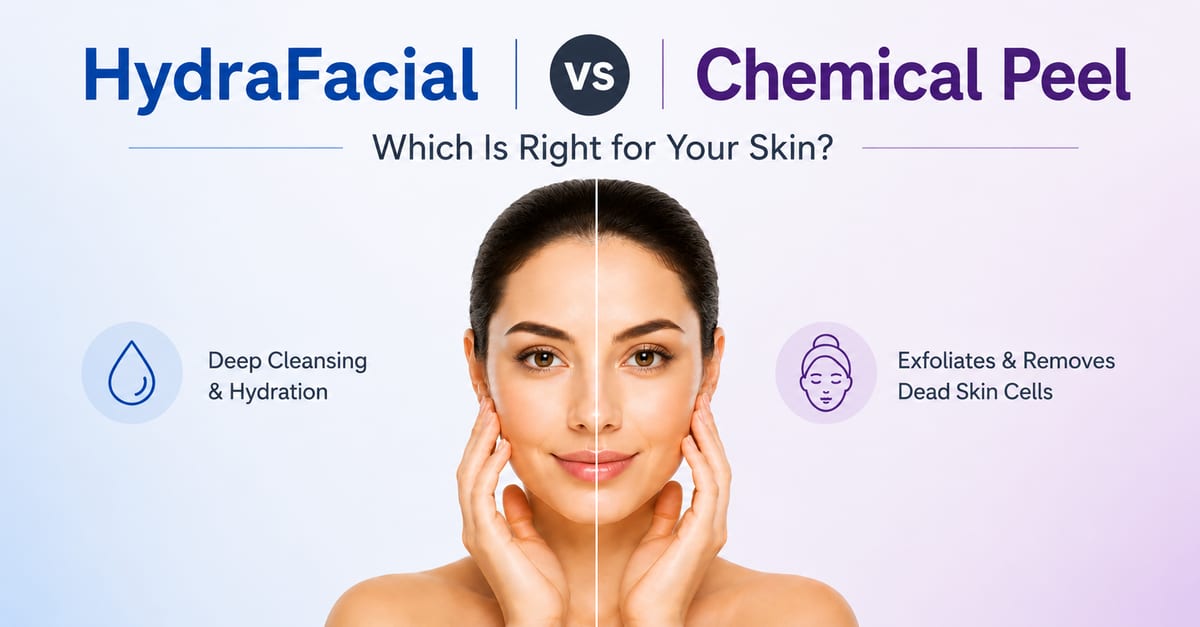
HydraFacial vs Chemical Peel: What’s the Difference?
Although both treatments improve skin quality, their approach is different.
| HydraFacial | Chemical Peel |
|---|---|
| Deep cleansing and hydration | Controlled skin exfoliation |
| Immediate glow | Gradual skin renewal |
| No peeling | Mild to moderate peeling may occur |
| Minimal downtime | Downtime depends on peel strength |
| Suitable before events | Best planned in advance |
| Safe for most skin types | Requires dermatologist assessment |
Neither treatment is “better” than the other.
The best option depends on your skin concerns.
Which Treatment Is Better for Dull Skin?
For patients with dull, tired-looking skin, HydraFacial is often the preferred choice.
It provides:
- Instant brightness
- Hydration
- Smooth texture
- Healthy glow
Results are visible immediately after treatment.
Which Treatment Is Better for Pigmentation?
When pigmentation is the primary concern, Chemical Peels generally provide better long-term improvement.
Depending on the cause of pigmentation, treatment may also include:
- Medical skincare
- Laser therapy
- Sunscreen
- Maintenance peels
Pigmentation often requires multiple sessions for optimal results.
Which Treatment Is Better for Acne?
The answer depends on whether you’re treating active acne or acne scars.
Active Acne
HydraFacial can help reduce:
- Excess oil
- Congestion
- Blackheads
Acne Marks
Chemical peels improve post-inflammatory pigmentation.
Acne Scars
Microneedling or laser treatments may provide better results than either HydraFacial or Chemical Peels alone.
Which Treatment Is Better Before a Wedding?
HydraFacial is an excellent pre-event treatment.
Most brides and grooms choose HydraFacial because:
- No downtime
- Instant glow
- Makeup applies beautifully
- Skin feels refreshed
It is commonly performed a few days before the event.
Is HydraFacial Painful?
No.
Most patients describe the procedure as relaxing.
There is:
- No discomfort
- No needles
- No recovery time
Many patients compare it to a gentle facial massage.
Are Chemical Peels Painful?
Chemical peels may produce:
- Mild tingling
- Warmth
- Temporary stinging
These sensations are usually short-lived.
Post-treatment peeling varies depending on the peel strength.
How Many Sessions Are Needed?
HydraFacial
Many patients notice improvement after one treatment.
Monthly sessions help maintain healthy skin.
Chemical Peels
Typically require:
- Three to six sessions
depending on pigmentation, acne, and skin condition.
Can HydraFacial and Chemical Peels Be Combined?
Yes.
This is one of the most effective strategies for comprehensive skin rejuvenation.
A customized treatment plan may alternate HydraFacials with Chemical Peels depending on your skin goals.
For example:
Month 1
HydraFacial
Month 2
Chemical Peel
Month 3
HydraFacial
This combination helps maintain hydration while improving pigmentation and skin texture.
Are HydraFacial and Chemical Peels Safe?
Both HydraFacials and Chemical Peels are considered safe when performed under the supervision of qualified medical professionals using appropriate techniques and products.
Before recommending any treatment, I always perform a detailed skin assessment to understand:
- Your skin type
- Existing skin conditions
- Medical history
- Current skincare routine
- Lifestyle habits
- Previous cosmetic procedures
This helps ensure that the treatment is not only effective but also safe for your skin.
Possible Side Effects of HydraFacial
HydraFacial is one of the gentlest professional skin treatments available and has very little downtime.
Some patients may experience temporary:
- Mild redness
- Slight skin sensitivity
- Tightness immediately after treatment
These effects usually disappear within a few hours.
Most patients return to work or social activities immediately after the procedure.
Possible Side Effects of Chemical Peels
Since Chemical Peels intentionally exfoliate the skin, temporary side effects are expected.
These may include:
- Mild redness
- Dryness
- Tightness
- Peeling or flaking
- Temporary sensitivity to sunlight
The extent of peeling depends on the strength of the peel.
Following your dermatologist’s post-treatment instructions is essential for optimal healing and results.
Recovery Time: HydraFacial vs Chemical Peel
Recovery is another important factor when deciding between the two treatments.
HydraFacial
Recovery time is virtually zero.
You can usually:
- Resume work immediately
- Wear makeup the next day (or as advised)
- Continue normal activities
Many patients schedule a HydraFacial just before an important event because of the instant glow and lack of downtime.
Chemical Peel
Recovery depends on the depth of the peel.
Superficial Peel
- Mild dryness
- Minimal peeling
- Recovery in 1–3 days
Medium Peel
- Noticeable peeling
- Temporary redness
- Recovery in 5–7 days
Your dermatologist will advise you on the appropriate aftercare and when to resume your regular skincare routine.
HydraFacial vs Chemical Peel: Which One Gives Faster Results?
HydraFacial provides immediate visible improvement.
After just one session, many patients notice:
- Brighter skin
- Better hydration
- Improved texture
- A healthy glow
Chemical Peels work differently.
Rather than delivering an instant cosmetic effect, they gradually improve the skin over the following days and weeks as damaged skin cells are replaced with healthier new skin.
If your goal is instant radiance, HydraFacial is generally the better choice.
If your goal is correcting pigmentation, acne marks, or uneven skin tone, Chemical Peels often provide more significant long-term improvement.
Can HydraFacial and Chemical Peels Be Combined?
Absolutely.
In fact, many of my patients achieve the best outcomes by combining both treatments as part of a personalized skincare plan.
For example:
For Dull Skin and Dehydration
- Monthly HydraFacial
- Medical-grade skincare
- Daily sunscreen
For Pigmentation
- Chemical Peels at recommended intervals
- Brightening skincare products
- Strict sun protection
For Multiple Skin Concerns
Patients with dull skin, pigmentation, enlarged pores, and early aging often benefit from alternating HydraFacial and Chemical Peel sessions throughout the year.
Rather than viewing these treatments as competitors, it’s often more helpful to think of them as complementary procedures that serve different purposes.
Which Treatment Is Better for Different Skin Concerns?
| Skin Concern | Recommended Treatment |
|---|---|
| Dull Skin | HydraFacial |
| Dry Skin | HydraFacial |
| Dehydrated Skin | HydraFacial |
| Enlarged Pores | HydraFacial |
| Oily Skin | HydraFacial |
| Blackheads | HydraFacial |
| Mild Acne | HydraFacial (selected cases) |
| Pigmentation | Chemical Peel |
| Melasma | Chemical Peel with medical skincare |
| Sun Damage | Chemical Peel |
| Fine Lines | Chemical Peel |
| Acne Marks | Chemical Peel |
| Uneven Skin Tone | Chemical Peel |
| Combination Concerns | Customized treatment plan |
How Often Should You Get These Treatments?
HydraFacial
For healthy skin maintenance, many patients benefit from a session every 4 to 6 weeks.
Regular treatments help maintain hydration, improve skin texture, and keep pores clean.
Chemical Peels
The frequency depends on the skin concern being treated.
Most patients undergo 3 to 6 sessions, spaced several weeks apart.
Once the desired improvement is achieved, maintenance treatments may be recommended based on your skin’s needs.
Tips to Maintain Your Results
Whether you choose HydraFacial or Chemical Peels, long-term results depend on how well you care for your skin afterward.
I usually recommend:
Wear Sunscreen Every Day
Daily SPF is one of the most important steps in preventing pigmentation and premature aging.
Stay Hydrated
Healthy skin starts from within.
Adequate hydration supports better skin texture and elasticity.
Follow a Medical-Grade Skincare Routine
Using dermatologist-recommended products can help prolong treatment results and improve overall skin health.
Avoid Excessive Sun Exposure
Ultraviolet (UV) radiation is one of the leading causes of pigmentation, fine lines, and collagen loss.
Eat a Balanced Diet
A diet rich in antioxidants, vitamins, healthy fats, and protein supports healthier skin from the inside out.
Common Myths About HydraFacial and Chemical Peels
Myth 1: HydraFacial and Chemical Peels Are the Same
False.
Although both improve skin quality, they work through entirely different mechanisms and are used for different concerns.
Myth 2: Chemical Peels Thin the Skin
False.
When performed appropriately, chemical peels stimulate skin renewal and collagen production rather than permanently thinning the skin.
Myth 3: HydraFacial Is Only for Women
False.
An increasing number of men choose HydraFacial to improve skin texture, reduce oiliness, and maintain healthy skin.
Myth 4: Chemical Peels Are Unsafe for Indian Skin
False.
Modern chemical peels can be safely customized for Indian skin when selected and performed by experienced professionals.
Myth 5: One Session Is Enough
False.
While HydraFacial provides an immediate glow, maintaining healthy skin requires ongoing care.
Similarly, pigmentation and acne marks usually improve gradually over multiple Chemical Peel sessions.
My Approach at Derma Solutions
At Derma Solutions, I believe that great skin is not achieved through a single treatment—it is achieved through the right diagnosis, personalized care, and consistency.
Every patient’s skin is unique.
During consultation, I evaluate not only the visible skin concern but also the underlying factors contributing to it, such as sun exposure, lifestyle, age, hydration, hormonal influences, and previous treatments.
Rather than recommending the latest trend, I recommend the treatment that is most appropriate for your skin’s current condition and long-term goals.
Some patients benefit from HydraFacial alone.
Others may require Chemical Peels, laser treatments, microneedling, or a combination of procedures.
Our objective is always the same—to achieve healthy, radiant, and natural-looking skin while preserving its long-term health.
Final Thoughts
So, which treatment is better—HydraFacial or Chemical Peel?
The answer depends entirely on your skin concerns and treatment goals.
If your skin feels dull, dehydrated, congested, or lacks radiance, a HydraFacial is an excellent option for restoring hydration and delivering an immediate glow with no downtime.
If your primary concern is pigmentation, acne marks, uneven skin tone, or early signs of aging, a Chemical Peel may offer more targeted and long-lasting improvement.
In many cases, the most effective approach is not choosing one over the other, but combining them as part of a customized treatment plan.
Healthy, glowing skin is not about following trends or selecting the most popular treatment. It is about understanding your skin, addressing the underlying causes of your concerns, and choosing evidence-based solutions that are tailored to your individual needs.
If you are unsure which treatment is right for you, a professional skin consultation is the best place to start. Together, we can develop a personalized skincare plan that helps you achieve clearer, brighter, and healthier skin with safe and natural-looking results.