Table of Contents
Introduction
Breast surgery is one of the most commonly performed procedures worldwide. While many people associate breast surgery with cosmetic enhancement, the reality is that breast procedures encompass a wide spectrum—from correcting congenital breast abnormalities and treating benign breast conditions to breast reconstruction after cancer surgery and aesthetic procedures like breast augmentation, reduction, or lift.
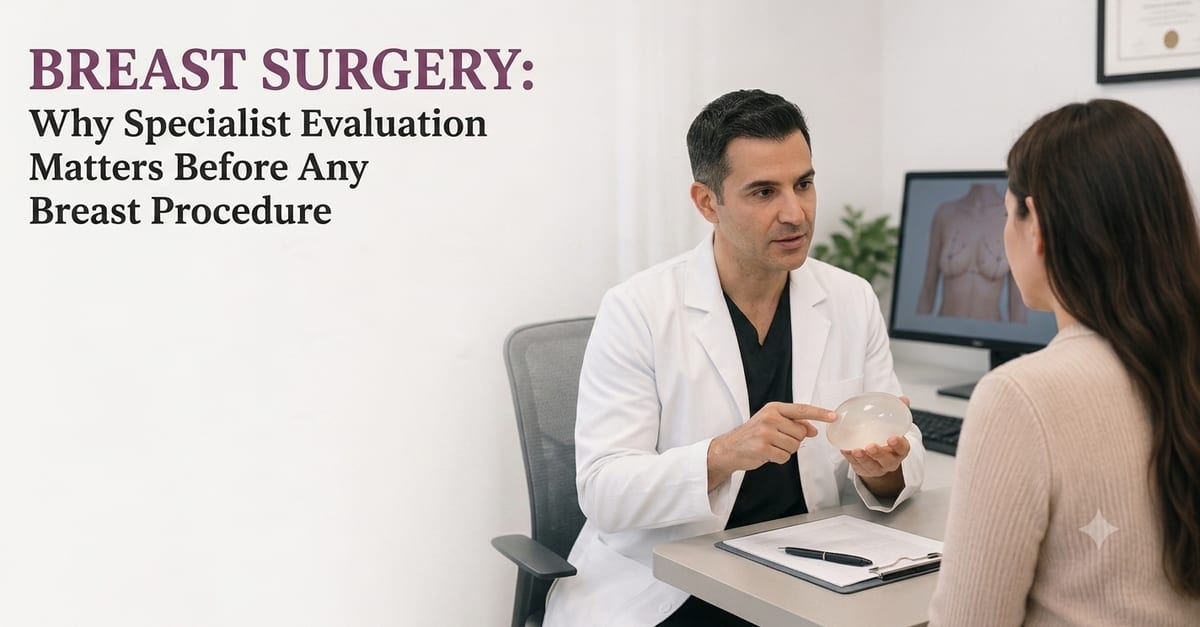
Regardless of the reason for surgery, one step should never be overlooked: a comprehensive specialist evaluation before undergoing any breast procedure.
Many patients focus primarily on the procedure itself—its cost, scars, recovery time, or expected results. However, the success of any breast surgery begins long before entering the operating room. It starts with an accurate diagnosis, understanding the patient’s anatomy, assessing medical fitness, identifying potential risks, and creating an individualized surgical plan.
Unfortunately, skipping or rushing through this evaluation can lead to avoidable complications, unsatisfactory outcomes, or delayed diagnosis of serious underlying conditions.
This is why consulting a qualified plastic and reconstructive surgeon is crucial before making any decision regarding breast surgery.
In this article, we’ll discuss why specialist evaluation matters, what happens during your consultation, who should undergo evaluation, and how proper planning leads to safer surgeries and better long-term outcomes.
Understanding Breast Surgery
Breast surgery is not a single procedure. Instead, it refers to multiple surgeries performed for different medical and cosmetic reasons.
These include:
- Breast augmentation
- Breast reduction
- Breast lift (Mastopexy)
- Breast reconstruction after mastectomy
- Correction of breast asymmetry
- Removal of benign breast lumps
- Revision breast surgery
- Gynecomastia surgery in men
- Congenital breast deformity correction
Each of these procedures requires different surgical planning and expertise.
A specialist determines which approach best suits the patient’s body type, medical condition, lifestyle, and expectations.
Why Every Breast Procedure Needs Specialist Evaluation
Many patients believe evaluation is simply about deciding whether surgery is necessary.
In reality, it is much more comprehensive.
A detailed consultation helps answer several critical questions:
- Is surgery actually required?
- Is there an underlying breast disease?
- Is imaging needed before surgery?
- Is the patient medically fit?
- Which surgical technique offers the safest outcome?
- What results are realistically achievable?
- Are there alternative treatment options?
Without answering these questions, surgery should never proceed.
Detecting Underlying Breast Conditions
One of the biggest reasons for specialist evaluation is ruling out hidden breast disease.
Not every breast lump is harmless.
Likewise, not every breast enlargement or pain is cosmetic.
A thorough evaluation helps identify:
- Breast cysts
- Fibroadenomas
- Fat necrosis
- Infection
- Abscesses
- Benign tumors
- Suspicious breast masses
- Early breast cancer
Sometimes patients visit seeking cosmetic correction but are found to have an unrelated medical condition requiring immediate treatment.
Early diagnosis can significantly improve treatment outcomes.
Accurate Diagnosis Prevents Unnecessary Surgery
Many breast concerns can mimic one another.
For example:
- Breast asymmetry may result from hormonal changes.
- Breast enlargement could be due to weight gain.
- Pain may originate from chest muscles rather than breast tissue.
- Lumps may be benign cysts rather than tumors.
Without specialist assessment, patients may undergo unnecessary surgery or inappropriate treatment.
Accurate diagnosis is always the first step.
Evaluating Personal Risk Factors
Every patient has unique risk factors that influence surgery.
These include:
Age
Different age groups require different screening protocols.
Younger women often need ultrasound imaging.
Older women may require mammography before surgery.
Family History
A family history of breast cancer may require additional investigations.
Patients with hereditary cancer risk may need more detailed screening before elective surgery.
Hormonal Status
Hormonal fluctuations influence breast tissue.
Specialists assess:
- Pregnancy
- Breastfeeding
- Menopause
- Hormonal medications
- Fertility treatments
These factors affect both surgical planning and healing.
Existing Medical Conditions
Conditions such as:
- Diabetes
- High blood pressure
- Thyroid disorders
- Autoimmune diseases
- Obesity
- Bleeding disorders
can increase surgical risks.
Proper management reduces complications.
Importance of Breast Imaging Before Surgery
Not everyone requires imaging.
However, when indicated, it becomes an essential part of evaluation.
Depending on age and symptoms, your surgeon may recommend:
Breast Ultrasound
Useful for:
- Younger women
- Dense breast tissue
- Breast lumps
- Cysts
Mammography
Recommended for:
- Women above 40 years
- Suspicious breast findings
- Cancer screening
- Pre-operative evaluation
MRI Breast
Reserved for selected patients with:
- High cancer risk
- Implant evaluation
- Complex breast abnormalities
- Breast reconstruction planning
Imaging ensures surgery proceeds safely without overlooking hidden pathology.
Understanding Breast Anatomy
Every breast is unique.
No two patients have identical anatomy.
Specialists carefully assess:
- Breast volume
- Skin quality
- Nipple position
- Breast symmetry
- Chest wall anatomy
- Tissue thickness
- Existing scars
- Skin elasticity
These factors determine which surgical technique will produce the best outcome.
Importance of Skin Quality
Skin plays a major role in breast surgery success.
Loose skin may require:
- Breast lift
- Skin tightening
- Combined procedures
Tight skin may influence implant selection or surgical approach.
Ignoring skin quality often results in poor cosmetic outcomes.
Evaluating Breast Symmetry
Perfect symmetry rarely exists naturally.
Minor differences are completely normal.
However, significant asymmetry requires careful planning.
Specialists measure:
- Breast width
- Projection
- Nipple height
- Breast volume
- Chest wall differences
These measurements guide customized surgical correction.
Setting Realistic Expectations
One of the most valuable aspects of specialist consultation is patient education.
Many patients arrive with photographs from social media or celebrity references.
Unfortunately, every body heals differently.
Specialists explain:
- What surgery can achieve
- What surgery cannot change
- Scar expectations
- Recovery timeline
- Implant limitations
- Longevity of results
Realistic expectations improve patient satisfaction.
Choosing the Right Procedure
Not every patient needs implants.
Not every sagging breast requires a lift alone.
Sometimes a combination procedure offers better results.
Examples include:
- Breast lift with implants
- Breast reduction with lift
- Fat grafting
- Breast reconstruction
- Implant exchange
Proper evaluation ensures the correct procedure is selected.
Implant Selection Requires Expertise
If implants are part of the surgical plan, specialist evaluation becomes even more important.
The surgeon considers:
- Implant size
- Shape
- Projection
- Surface characteristics
- Implant placement
- Breast dimensions
- Tissue coverage
Choosing implants based solely on cup size often leads to dissatisfaction.
Assessing Lifestyle Factors
Your daily activities influence surgical planning.
Important considerations include:
- Occupation
- Exercise routine
- Sports participation
- Weight fluctuations
- Smoking
- Alcohol consumption
For athletes or physically demanding professions, recovery planning differs significantly.
Smoking Significantly Increases Complications
Smoking reduces blood supply to tissues.
This increases the risk of:
- Delayed wound healing
- Infection
- Skin loss
- Poor scars
- Implant complications
Patients are often advised to stop smoking several weeks before surgery.
Body Weight Matters
Stable body weight produces more predictable surgical results.
Major weight changes after surgery can affect:
- Breast shape
- Implant position
- Skin stretching
- Long-term outcomes
Weight management should be discussed during evaluation.
Pregnancy and Future Breastfeeding
Women planning future pregnancies should discuss this openly.
Pregnancy may change:
- Breast size
- Skin elasticity
- Surgical results
Although many women can breastfeed after breast surgery, the possibility depends on the type of procedure performed.
A specialist explains these considerations before surgery.
Psychological Readiness Is Equally Important
Successful breast surgery involves both physical and emotional well-being.
During evaluation, specialists assess:
- Motivation for surgery
- Body image expectations
- Emotional preparedness
- Understanding of recovery
- Support system
Patients making informed decisions generally report greater satisfaction.
Understanding Surgical Risks
Every surgery carries risks.
These include:
- Bleeding
- Infection
- Poor scarring
- Implant rupture
- Capsular contracture
- Fluid collection
- Changes in nipple sensation
- Delayed healing
- Need for revision surgery
Discussing these risks beforehand enables informed consent and appropriate expectations.
Preparing for Surgery
Pre-operative planning often includes:
- Blood investigations
- Imaging studies
- Medical clearance
- Medication review
- Smoking cessation
- Nutritional advice
- Fitness assessment
Proper preparation reduces complications.
Why Experience Matters
Breast surgery combines medical knowledge, reconstructive expertise, and artistic judgment.
An experienced plastic surgeon understands:
- Breast proportions
- Tissue handling
- Scar placement
- Symmetry correction
- Long-term aesthetic outcomes
Experience directly contributes to safer surgery and improved results.
Recovery Planning Begins Before Surgery
Recovery does not begin after surgery—it begins before it.
Patients receive guidance regarding:
- Pain management
- Sleeping position
- Surgical bra usage
- Activity restrictions
- Wound care
- Follow-up appointments
- Return to work
- Exercise timelines
Knowing what to expect reduces anxiety and improves recovery.
Common Questions Patients Ask During Evaluation
Patients frequently ask:
- Will there be visible scars?
- How long is recovery?
- Will implants need replacement?
- Can I breastfeed later?
- When can I return to work?
- Is surgery painful?
- What if I gain weight?
- How long will results last?
A thorough consultation provides clear, personalized answers.
Red Flags That Should Never Be Ignored
Seek immediate specialist evaluation if you notice:
- A new breast lump
- Persistent breast pain
- Bloody nipple discharge
- Skin dimpling
- Sudden breast swelling
- Nipple inversion
- Redness with fever
- Rapid change in breast size
Early evaluation can detect serious conditions before they progress.
The Importance of Personalized Treatment
No two patients should receive identical treatment plans.
Specialist evaluation allows surgery to be tailored according to:
- Body proportions
- Health condition
- Breast anatomy
- Lifestyle
- Personal goals
- Future family planning
- Long-term expectations
This individualized approach consistently delivers better outcomes.
Why Choose a Qualified Plastic Surgeon?
A board-certified plastic and reconstructive surgeon possesses specialized training in:
- Breast aesthetics
- Breast reconstruction
- Tissue preservation
- Scar optimization
- Complex revision surgeries
- Management of complications
Choosing the right surgeon is just as important as choosing the right procedure.
Breast Surgery Is More Than Cosmetic
Many breast procedures improve:
- Physical comfort
- Back and neck pain
- Posture
- Confidence
- Clothing fit
- Exercise ability
- Quality of life
For reconstruction patients, surgery also helps restore body image following cancer treatment or trauma.
Final Thoughts
Breast surgery is a significant decision that should never be rushed. Whether you are considering breast augmentation, reduction, lift, reconstruction, or evaluation of a breast concern, the first and most important step is a comprehensive consultation with an experienced specialist.
A thorough pre-operative assessment goes far beyond deciding whether surgery is appropriate. It ensures that any underlying breast condition is identified, your overall health is evaluated, your goals are clearly understood, and a treatment plan is tailored specifically to your needs. This careful approach minimizes risks, enhances safety, and improves both functional and aesthetic outcomes.
Every individual has unique anatomy, medical history, and expectations. There is no one-size-fits-all solution in breast surgery. Personalized planning, combined with expert surgical judgment and patient education, forms the foundation of successful treatment.
At Derma Solutions, Dr. Sandeep Mahapatra believes that informed patients make the best decisions. Through detailed consultations, evidence-based recommendations, and patient-centric care, the focus is always on achieving safe, natural-looking, and long-lasting results while prioritizing your health and well-being.
If you are considering any type of breast procedure or have concerns about your breast health, schedule a specialist evaluation before taking the next step. The right guidance today can make all the difference to your confidence, safety, and long-term satisfaction.
References
- American Society of Plastic Surgeons (ASPS). Breast Surgery Procedures. https://www.plasticsurgery.org
- American College of Obstetricians and Gynecologists (ACOG). Benign Breast Disorders. https://www.acog.org
- National Comprehensive Cancer Network (NCCN). Breast Cancer Screening and Diagnosis Guidelines. https://www.nccn.org
- American Cancer Society. Breast Cancer Screening Guidelines. https://www.cancer.org
- National Institute for Health and Care Excellence (NICE). Early and Locally Advanced Breast Cancer Guidelines. https://www.nice.org.uk