
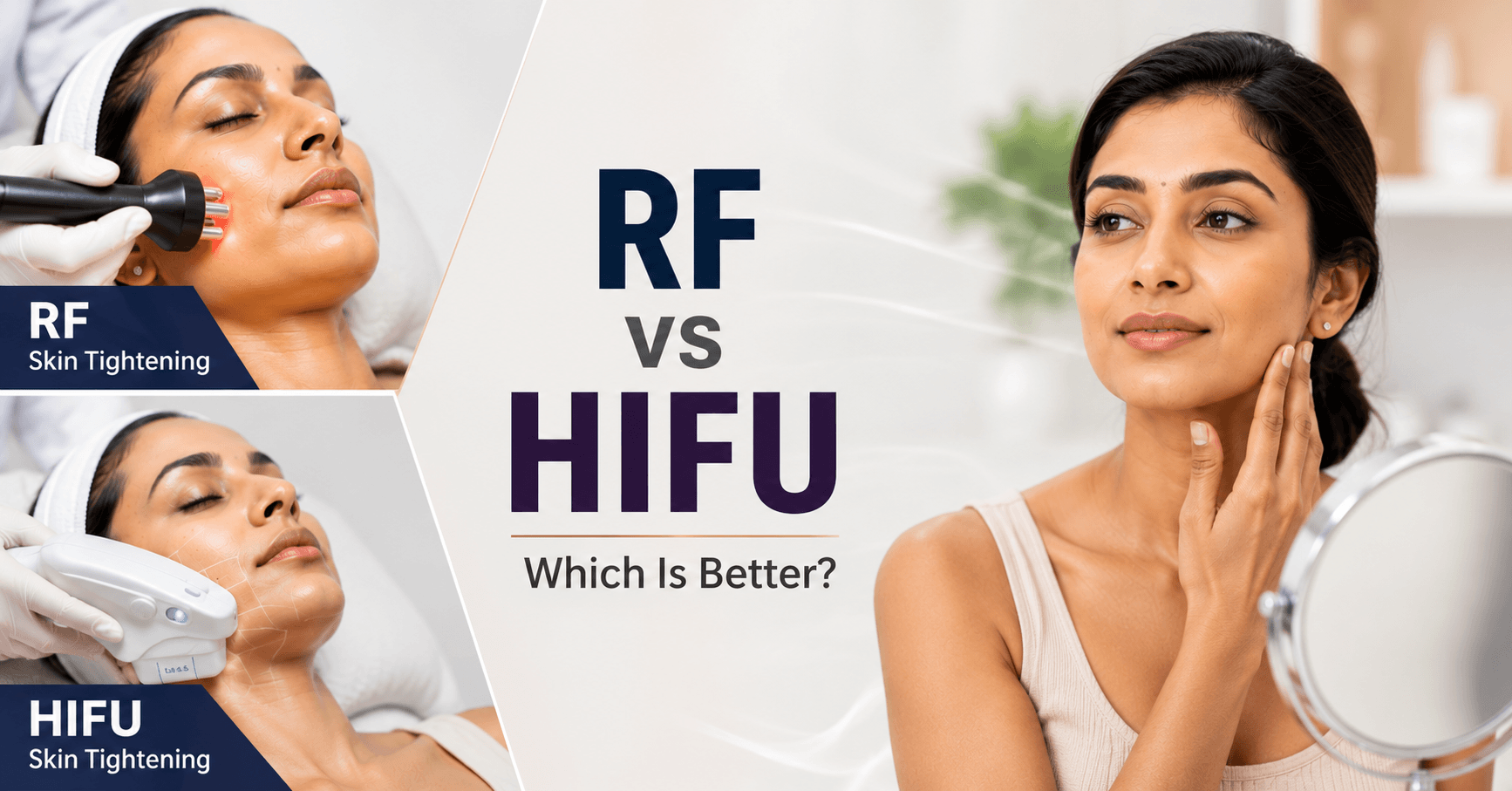
One of the biggest concerns I hear from patients in their 30s, 40s, and 50s is this:
“Doctor, my skin looks loose. What can I do without surgery?”
Some notice that their jawline isn’t as defined as it used to be.
Others see sagging around the cheeks.
Some are bothered by a double chin.
Many feel their face looks tired despite taking good care of their skin.
When they begin researching online, they often come across two popular treatments:
and
High-Intensity Focused Ultrasound (HIFU).
This naturally leads to another question.
“Which one is better?”
The truth is that neither treatment is universally better.
Each works differently.
Each targets different layers of the skin.
Each has its own strengths and limitations.
At Derma Solutions, Marathahalli, Bengaluru, one of the most important parts of my consultation is helping patients understand which treatment is likely to give the most natural and realistic results for their skin.
In this guide, I’ll explain exactly how RF and HIFU work, who they are suitable for, and how dermatologists decide which option is appropriate.
Before comparing treatments, it’s important to understand why skin loses firmness.
Ageing affects several layers of the face simultaneously.
Over time:
These changes don’t happen overnight.
Most patients begin noticing subtle skin laxity in their early to mid-30s.
The changes become more noticeable during the 40s and beyond.
Because different tissues are involved, no single treatment can reverse every sign of ageing.
Skin tightening refers to treatments that stimulate collagen remodeling.
Instead of stretching the skin mechanically, these procedures encourage the body to produce new collagen over several months.
As collagen increases, the skin may gradually appear:
This improvement develops naturally.
Unlike fillers, skin tightening procedures do not add volume.
Unlike Botox, they do not relax muscles.
Instead, they improve the skin’s structural support.
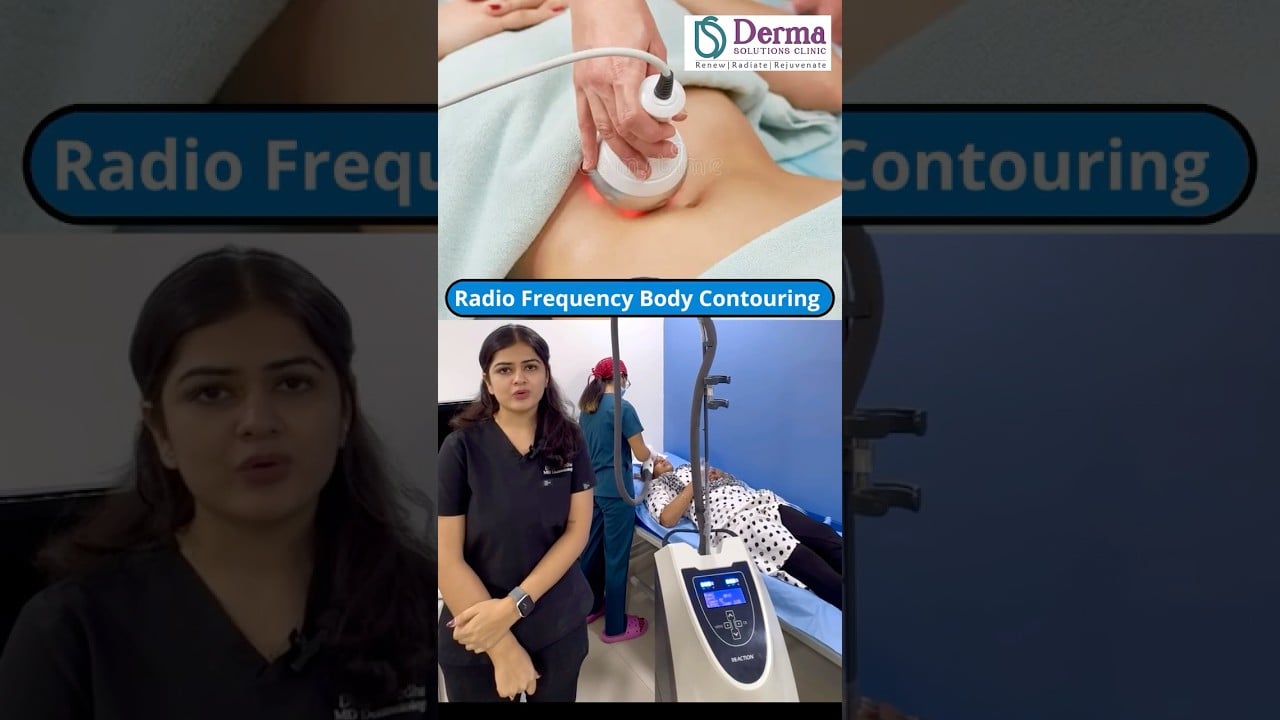
Radiofrequency uses controlled electrical energy to generate heat within the skin.
This heat stimulates collagen production.
As healing occurs, new collagen develops over the following weeks and months.
Modern dermatology uses several RF technologies.
Examples include:
Each works slightly differently.
Some mainly tighten skin.
Others also improve scars, enlarged pores, and skin texture.
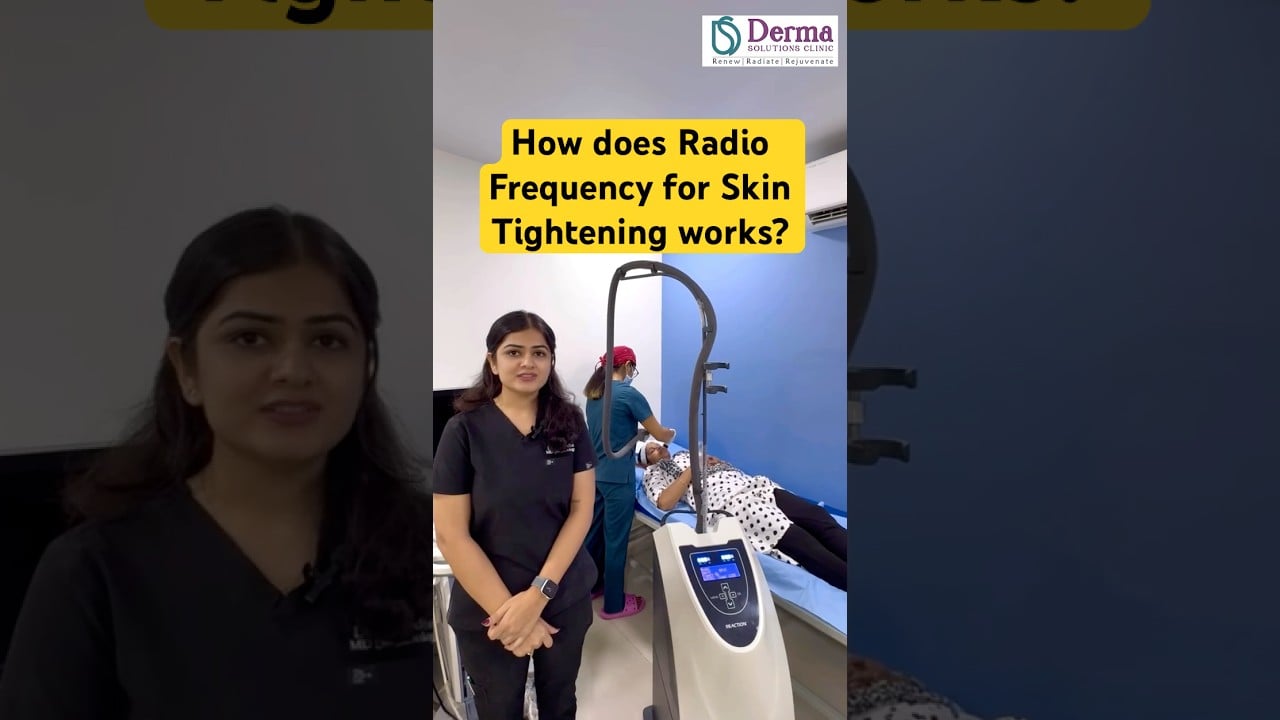
Radiofrequency produces controlled heating inside the dermis.
The heat causes collagen fibres to contract initially.
More importantly, it stimulates fibroblasts.
Fibroblasts are the cells responsible for producing collagen and elastin.
Over time, this leads to gradual skin remodeling.
The improvement is progressive rather than immediate.
Radiofrequency is commonly recommended for patients with:
Some RF devices can also improve stretch marks and certain types of scars.
RF offers several benefits.
It can:
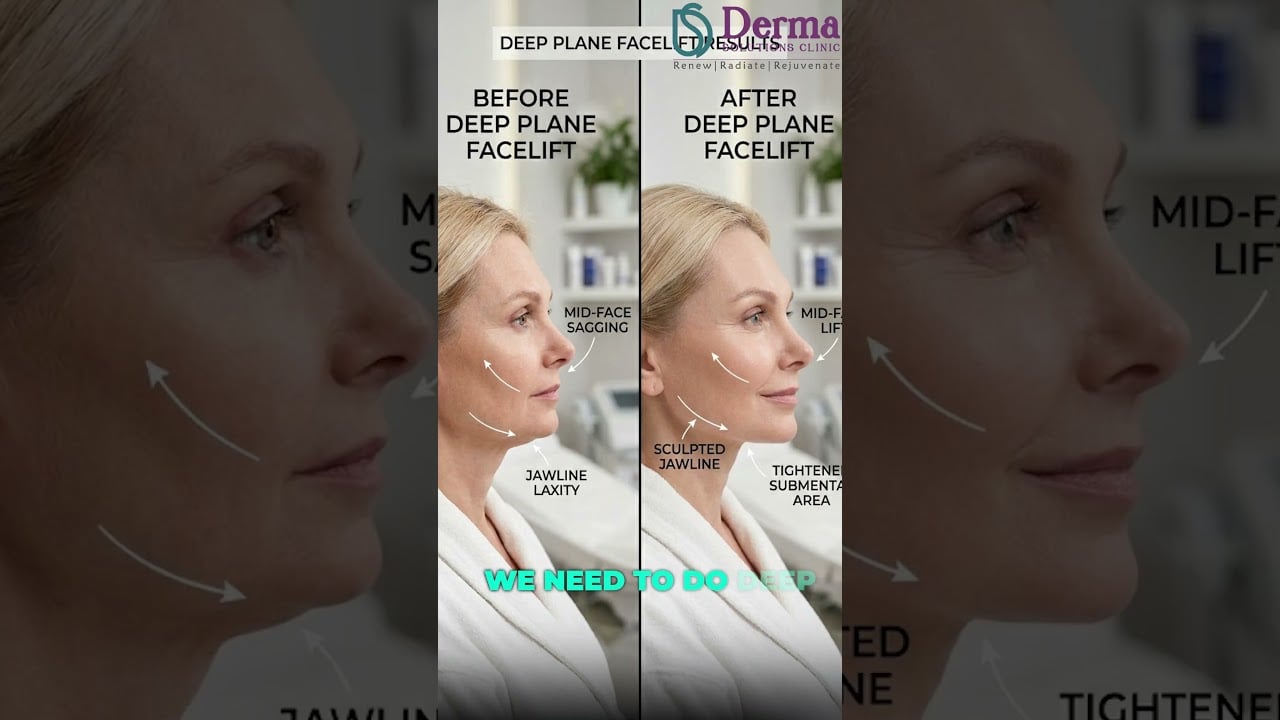
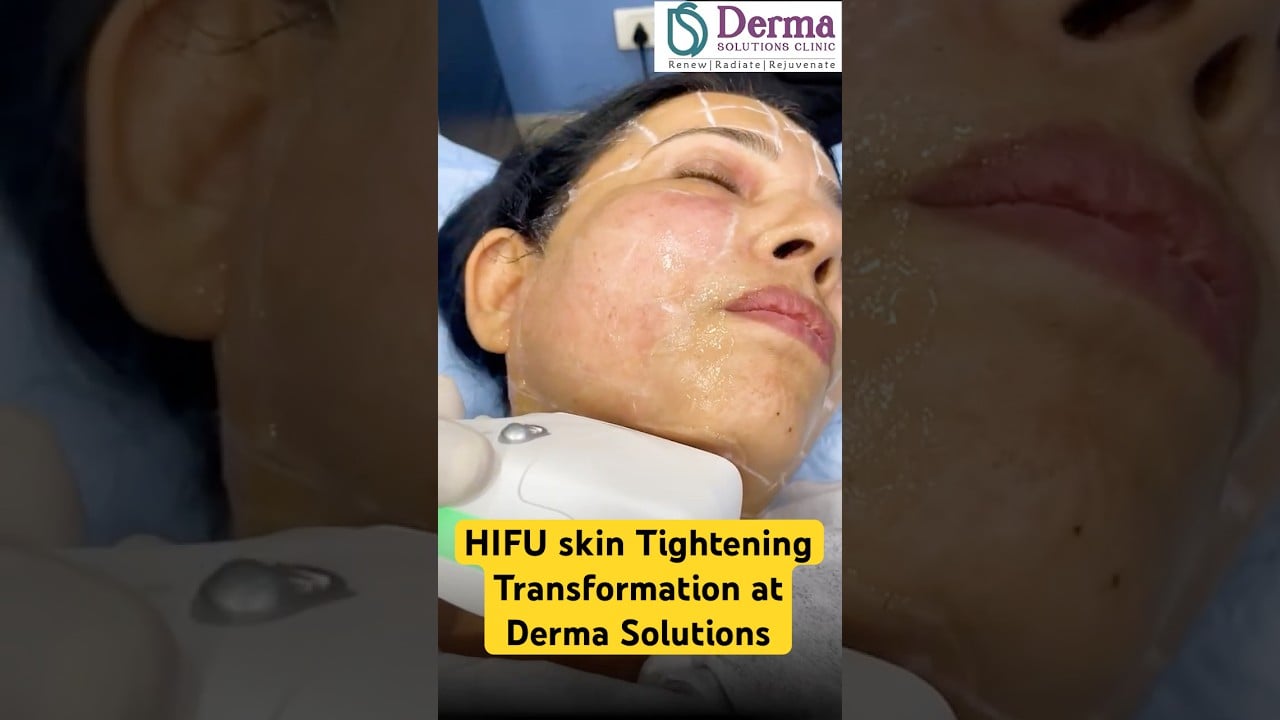
HIFU stands for High-Intensity Focused Ultrasound.
Unlike RF, HIFU delivers focused ultrasound energy deep beneath the skin.
The energy reaches the SMAS layer.
This is the same structural layer tightened during a surgical facelift.
However, HIFU does not involve surgery.
Instead, it creates tiny thermal points beneath the skin while leaving the surface largely unaffected.
This stimulates collagen remodeling over time.

Ultrasound energy bypasses the skin surface.
Instead, it focuses at specific depths beneath the skin.
Tiny thermal coagulation points trigger the body’s healing response.
New collagen gradually forms.
The lifting effect develops slowly over the following two to six months.
HIFU is often recommended for:
It is most suitable for patients with mild to moderate skin laxity.
HIFU offers several advantages.
It:
Many patients assume these treatments are interchangeable.
They are not.
The biggest difference lies in where the energy works.
Radiofrequency primarily heats the dermis.
HIFU reaches deeper structural layers, including the SMAS.
This difference influences:
It also explains why dermatologists sometimes recommend combining both treatments instead of choosing only one.
Comfort varies depending on the device, treatment settings, and individual pain tolerance.
Some patients describe RF as a sensation of warmth.
Others describe HIFU as brief, deep pulses.
Modern devices include comfort features that help make treatment more tolerable.
Your dermatologist can also recommend measures to improve comfort during the procedure.
This is an important question.
The answer is no.
Neither RF nor HIFU can produce the dramatic lifting achieved with surgery.
Instead, they are designed for:
For patients with significant skin laxity, surgery may still provide the most effective correction.
Choosing the right treatment begins with realistic expectations.
Although both treatments stimulate collagen production and improve skin firmness, they work differently and are suited for different concerns.
| Feature | Radiofrequency (RF) | HIFU |
|---|---|---|
| Energy Source | Radiofrequency energy | Focused ultrasound |
| Primary Target | Dermis and subdermal tissue | Deep SMAS layer and deeper tissues |
| Best For | Skin texture, fine lines, mild laxity | Lifting, jawline definition, mild sagging |
| Surface Skin Improvement | Excellent | Limited |
| Collagen Stimulation | Yes | Yes |
| Downtime | Minimal | Minimal |
| Results Develop | 4–12 weeks | 2–6 months |
| Suitable for Preventive Ageing | Yes | Yes |
| Best Combined With | Microneedling, skin boosters | Botox, fillers, RF |
Both treatments have an important place in cosmetic dermatology.
The right choice depends on your skin concern—not simply the technology.
Radiofrequency is often recommended for younger patients with early signs of ageing.
You may benefit from RF if you have:
Many patients in their early to mid-30s begin collagen-stimulating treatments such as RF before noticeable sagging develops.
This preventive approach may help maintain skin quality over time.
HIFU is often recommended for patients with visible facial laxity who are not yet ready for surgery.
It may be suitable if you notice:
HIFU is generally most effective in patients with mild to moderate skin laxity.
If significant excess skin is present, surgical lifting may produce better results.
Many patients expect immediate lifting.
In reality, collagen production takes time.
Radiofrequency may produce a mild early tightening effect because collagen fibers contract with heat.
However, the most meaningful improvement develops gradually over several weeks.
HIFU follows a similar pattern.
Patients usually notice progressive lifting over two to six months as new collagen forms.
Neither treatment should be viewed as an overnight solution.
Natural-looking improvement develops slowly.
The duration of results varies depending on several factors.
These include:
Many patients enjoy improvement for approximately one year or longer before maintenance sessions are considered.
Ageing continues naturally, so no treatment permanently stops collagen loss.
Maintenance helps preserve results.
Yes.
In many patients, combination therapy provides the most comprehensive rejuvenation.
This is because RF and HIFU target different tissue depths.
For example:
HIFU may improve deeper structural support.
RF may enhance skin quality closer to the surface.
Together, they may improve:
Combination treatment is particularly useful when patients have multiple concerns rather than a single isolated problem.
No.
These treatments work through completely different mechanisms.
Botox relaxes muscles responsible for dynamic wrinkles.
RF and HIFU stimulate collagen production.
They cannot reduce forehead movement or crow’s feet in the same way Botox can.
Many patients benefit from combining collagen stimulation with wrinkle-relaxing treatments.
Again, no.
Fillers restore lost volume.
Neither RF nor HIFU adds volume.
If cheeks appear flat because of age-related fat loss, tightening the skin alone may not restore youthful facial contours.
Sometimes collagen stimulation and volume restoration are both needed.
Yes.
When performed by experienced dermatologists using appropriate technology and treatment settings, both procedures are generally safe for Indian skin.
However, darker skin requires careful assessment.
Treatment should always be individualized to minimize the risk of:
Professional evaluation is essential before any energy-based procedure.
At Derma Solutions, consultation is never about choosing the newest machine.
It is about understanding your skin.
During assessment, I evaluate:
Sometimes RF is the better option.
Sometimes HIFU.
Sometimes another treatment—such as thread lifts, skin boosters, Botox, or fillers—may provide a better outcome.
The decision should always be individualized.
Professional treatments work best when combined with healthy daily habits.
To support collagen production:
Healthy skin responds better to collagen-stimulating treatments.
False.
Both have different indications.
One is not universally superior.
False.
Ageing is continuous.
Maintenance treatments are often recommended.
False.
They are designed for mild to moderate laxity.
Advanced sagging may require surgery.
False.
Collagen remodeling takes weeks to months.
Patience is essential.
Not necessarily.
Preventive collagen stimulation may be appropriate in selected patients with early collagen loss.
Treatment decisions should always be individualized.
Neither treatment is universally better.
RF is often preferred for improving skin texture, early laxity, and collagen stimulation closer to the skin surface.
HIFU is commonly chosen for deeper lifting and jawline definition.
The best option depends on your skin concerns and clinical evaluation.
HIFU can improve mild to moderate skin laxity by stimulating collagen production in deeper tissue layers.
Results develop gradually over several months.
Most patients describe RF as a warm sensation.
Modern devices include cooling systems and comfort features that improve the treatment experience.
Both treatments generally involve minimal downtime.
Most patients resume normal activities soon after treatment, although mild redness or swelling may occur temporarily.
Certain RF technologies, particularly microneedling radiofrequency (MNRF), are widely used to improve acne scars and stimulate collagen remodeling.
HIFU may improve mild skin laxity beneath the chin and enhance jawline definition in selected patients.
The outcome depends on skin quality and the amount of excess fat present.
The number of sessions varies depending on the treatment, skin condition, and desired results.
Your dermatologist will recommend a personalized treatment plan after assessment.
Many patients begin collagen-stimulating treatments in their 30s when early signs of ageing appear.
The timing depends on your skin rather than your age alone.
Yes.
Combination treatment is common and can address multiple ageing concerns, including wrinkles, volume loss, and skin laxity.
No.
They stimulate collagen production, but natural ageing continues.
Maintenance treatments may help preserve results over time.
Both Radiofrequency (RF) and High-Intensity Focused Ultrasound (HIFU) are effective non-surgical skin tightening treatments—but they are not competitors. They are complementary technologies designed to address different layers of the ageing process.
If your primary concern is skin texture, enlarged pores, fine lines, or early collagen loss, RF-based treatments may be more suitable.
If you are noticing early sagging, reduced jawline definition, or mild skin laxity, HIFU may provide better structural tightening.
In many cases, the best results come from a personalized treatment plan that combines different technologies rather than relying on a single procedure.
At Derma Solutions, Marathahalli, Bengaluru, every skin tightening treatment begins with a detailed consultation. Rather than recommending the latest trend, we focus on selecting evidence-based treatments that match your skin type, facial anatomy, and long-term aesthetic goals.
Natural-looking results come from careful planning—not simply choosing the most powerful machine.

Written by: Dr. Sandeep Mahapatra
Senior Dermatologist, Hair Transplant Surgeon & Founder – Derma Solutions Skin & Hair Clinic, Bangalore. | Dr. Sandeep Mahapatra is a senior dermatologist and hair transplant surgeon in Bangalore with extensive experience in dermatology, aesthetic treatments and hair restoration. As the founder of Derma Solutions Skin and Hair Clinic – Marathahalli, Bangalore , With extensive experience in aesthetic dermatology, he has performed 50,000+ laser hair removal treatments, 40,000+ chemical peels, 4,000+ Botox procedures, 2,000+ dermal filler treatments, and 3,000+ vitiligo treatments, helping patients achieve safe, natural-looking, and evidence-based skin and facial rejuvenation results.
Medically reviewed by: Dr. Sandeep Mahapatra
Senior Dermatologist & Hair Transplant Surgeon
Date Reviewed: 2026-07-13
This article has been medically reviewed by Dr. Sandeep Mahapatra to ensure Blog Author & Medical Reviewer