
One of the most common questions I hear from patients is:
“Doctor, I exercise regularly, but this stubborn fat just won’t go away. Should I choose Cryolipolysis or Liposuction?“
It’s a valid question.
Many people spend months following healthy diets, joining gyms, walking daily, or working with fitness trainers.
They lose weight.
Their clothes fit better.
But certain fat pockets refuse to disappear.
The abdomen still bulges.
Love handles remain.
The double chin is unchanged.
The lower belly doesn’t respond.
These are called stubborn fat deposits.
At Derma Solutions in Marathahalli, Bengaluru, I frequently consult patients from Whitefield, Bellandur, Sarjapur Road, Brookefield, HSR Layout, Electronic City, and surrounding areas who want to improve body contours—not necessarily lose weight.
This distinction is extremely important.
Neither Cryolipolysis nor Liposuction is designed as a treatment for obesity.
Both are body contouring procedures that target localized fat deposits in suitable candidates.
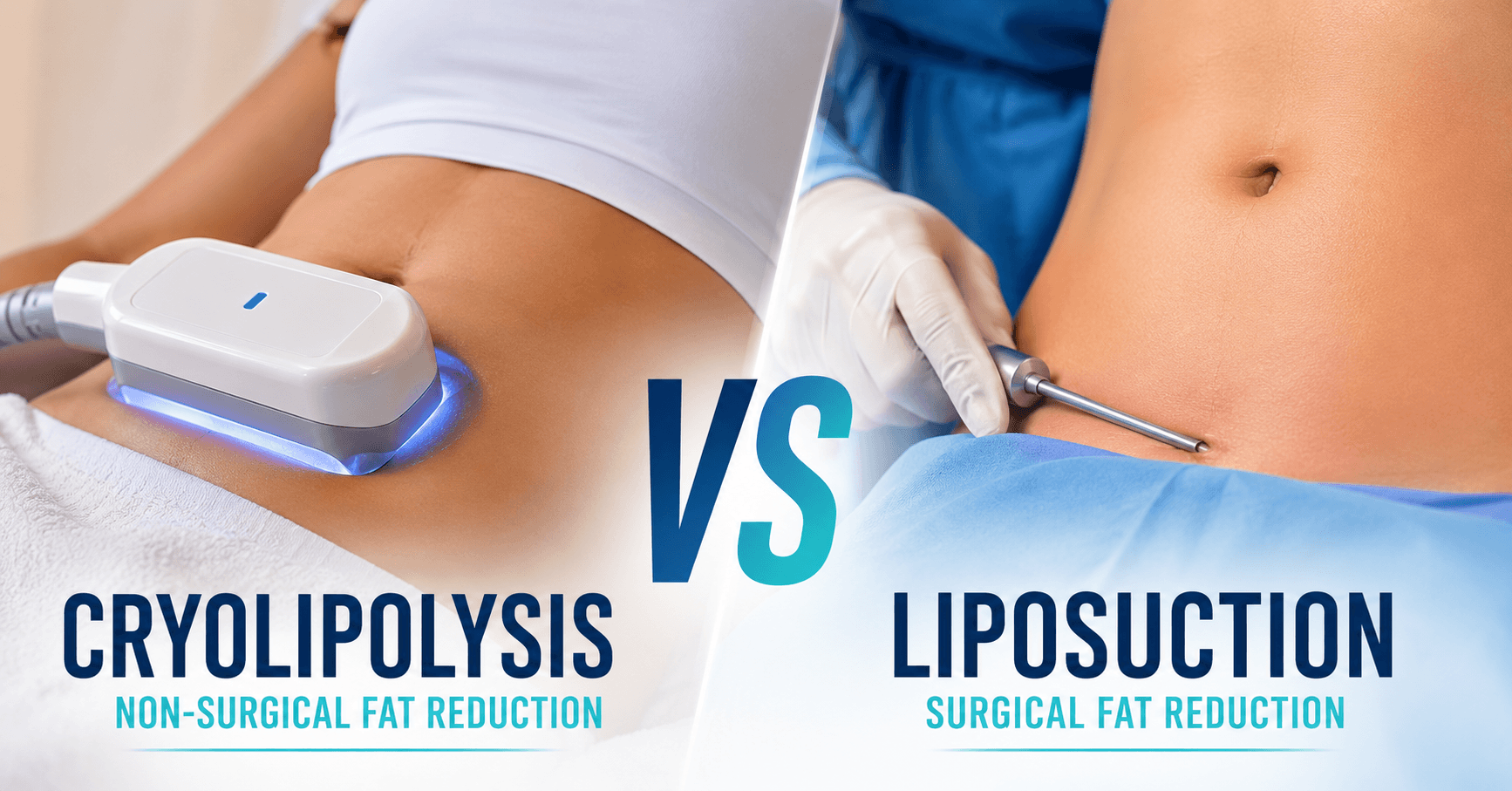
Although both treatments reduce unwanted fat, they work in completely different ways.
One is non-surgical.
The other is surgical.
One requires almost no downtime.
The other offers more dramatic contouring in appropriate patients.
Understanding these differences helps patients make informed decisions rather than choosing a treatment based on advertisements or social media trends.
Let’s begin by understanding why stubborn fat develops in the first place.
Many people assume that all body fat behaves the same way.
It doesn’t.
Certain areas of the body tend to store fat more stubbornly because of:
Common stubborn fat areas include:
Even people who are otherwise fit may struggle with these areas.
This is where body contouring treatments may help.
Body contouring refers to procedures that improve body shape by reducing localized fat deposits.
The goal is contouring, not overall weight reduction.
A patient may lose only a small amount of weight after treatment while still achieving a noticeable improvement in body proportions.
Good body contouring creates:
The ideal candidate is usually someone who:
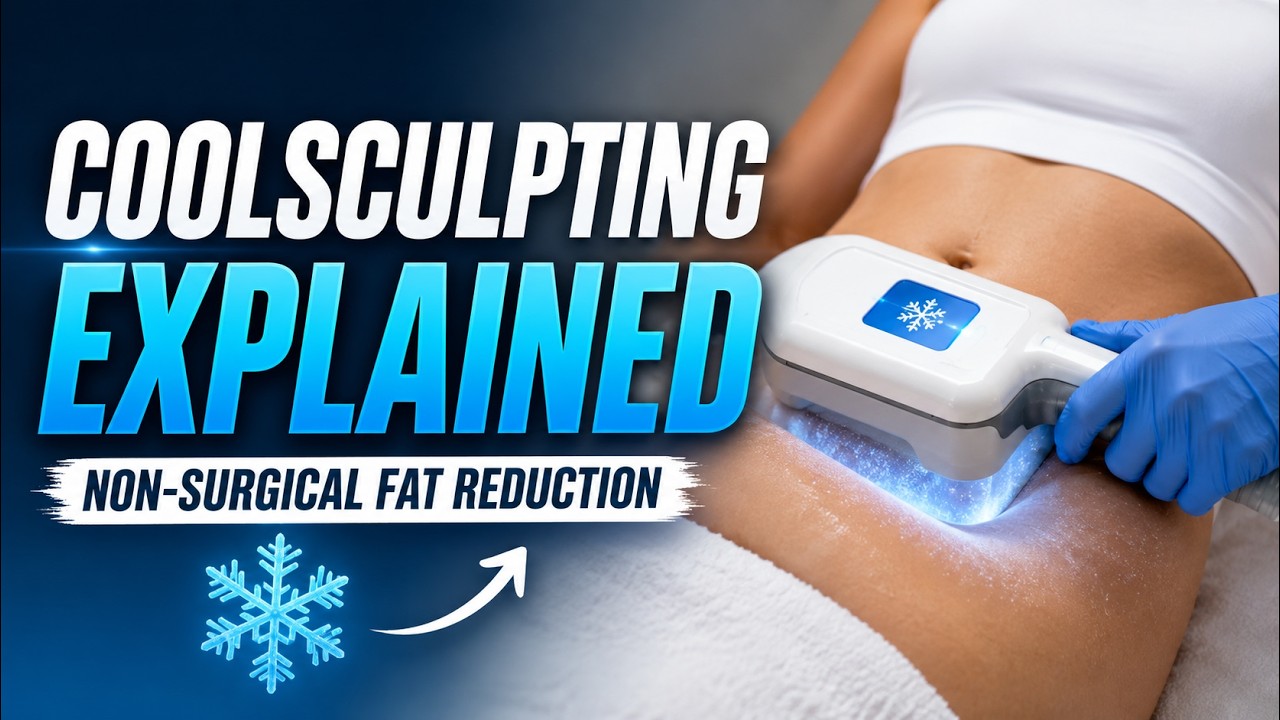
Cryolipolysis is a non-surgical fat reduction treatment that uses controlled cooling to target unwanted fat cells.
Many people know it by the brand name CoolSculpting, although several FDA-cleared technologies are now available.
Unlike surgery, Cryolipolysis does not involve:
Instead, specially designed applicators cool the targeted fat tissue to temperatures that selectively damage fat cells while protecting the surrounding skin and other tissues.
Over the following weeks and months, the body’s natural processes gradually eliminate these damaged fat cells.
The result is a gradual reduction in localized fat thickness.
Fat cells are more sensitive to cold than many surrounding tissues.
Cryolipolysis takes advantage of this biological difference.
During treatment:
Importantly, the fat reduction is gradual.
Results are not immediate.
Patients usually begin noticing improvement after several weeks, with continued changes over two to three months.
Depending on the technology and individual assessment, Cryolipolysis may be used for localized fat in areas such as:
Not every body area is suitable.
A consultation helps determine whether sufficient “pinchable” fat is present for effective treatment.
Cryolipolysis works best for people who:
It is not intended for:
These patients may benefit from different treatment approaches.
One reason Cryolipolysis has become so popular is its convenience.
Potential advantages include:
No cuts or stitches.
Many patients return to routine activities shortly after treatment.
Most treatments are performed comfortably in an outpatient setting.
Because fat reduction occurs progressively, body contour changes often appear subtle and natural.
Patients usually experience only temporary redness, numbness, or mild tenderness.
Although highly effective for selected patients, Cryolipolysis has limitations.
It may not be suitable if:
Some patients may require multiple treatment sessions to achieve their desired outcome.
This is something that should always be discussed during consultation.
Liposuction is a surgical body contouring procedure designed to remove larger volumes of unwanted fat.
Unlike Cryolipolysis, liposuction physically removes fat cells from the body using specialised instruments.
Small incisions are made.
A thin tube called a cannula is inserted beneath the skin.
The excess fat is carefully suctioned out while sculpting the treatment area.
Modern liposuction focuses on creating smooth, natural contours rather than simply removing as much fat as possible.
The procedure is highly customised according to the patient’s anatomy and goals.
Liposuction involves several steps.
Although techniques vary, the general process includes:
Because fat cells are physically removed, contour changes are generally more noticeable than with non-surgical treatments.
Liposuction can address larger or multiple body areas, including:
Treatment planning depends on the patient’s health, body shape, and goals.
Several liposuction techniques exist.
Your surgeon may recommend the most appropriate option based on your individual needs.
Common approaches include:
The most widely performed technique, involving infiltration of a specialised solution before fat removal.
Uses a vibrating cannula to facilitate fat removal.
Employs ultrasonic energy to help break down fat before removal.
Uses laser energy in selected situations, although traditional techniques remain suitable for many patients.
The best technique depends on the treatment area and surgeon’s expertise—not simply the latest technology.
Liposuction may be considered for patients who:
It is not intended as a substitute for healthy eating or regular exercise.
Maintaining a stable weight remains important even after surgery.
One of the most important conversations I have with patients is helping them understand that the “best” treatment is not the same for everyone.
Some patients are ideal candidates for Cryolipolysis because they want gradual, non-surgical body contouring with minimal downtime.
Others may achieve significantly better results with Liposuction because of larger fat deposits or more advanced contouring goals.
During consultation, I evaluate:
Only after a detailed assessment do we decide which treatment is likely to provide the safest and most satisfying outcome.
Choosing the right procedure is always more important than choosing the newest procedure.
Although both treatments reduce unwanted fat, they are designed for different types of patients.
| Feature | Cryolipolysis | Liposuction |
|---|---|---|
| Procedure | Non-surgical | Surgical |
| Anaesthesia | Usually not required | Local or general anaesthesia depending on treatment |
| Incisions | No | Small incisions |
| Downtime | Minimal | Several days to weeks depending on extent |
| Fat Removal | Gradual | Immediate removal |
| Best For | Small stubborn fat pockets | Larger fat deposits and body contouring |
| Recovery | Quick | Longer recovery |
| Skin Tightening | Minimal | Depends on skin elasticity and technique |
| Weight Loss Treatment | No | No |
| Results | Progressive | More immediate contour change |
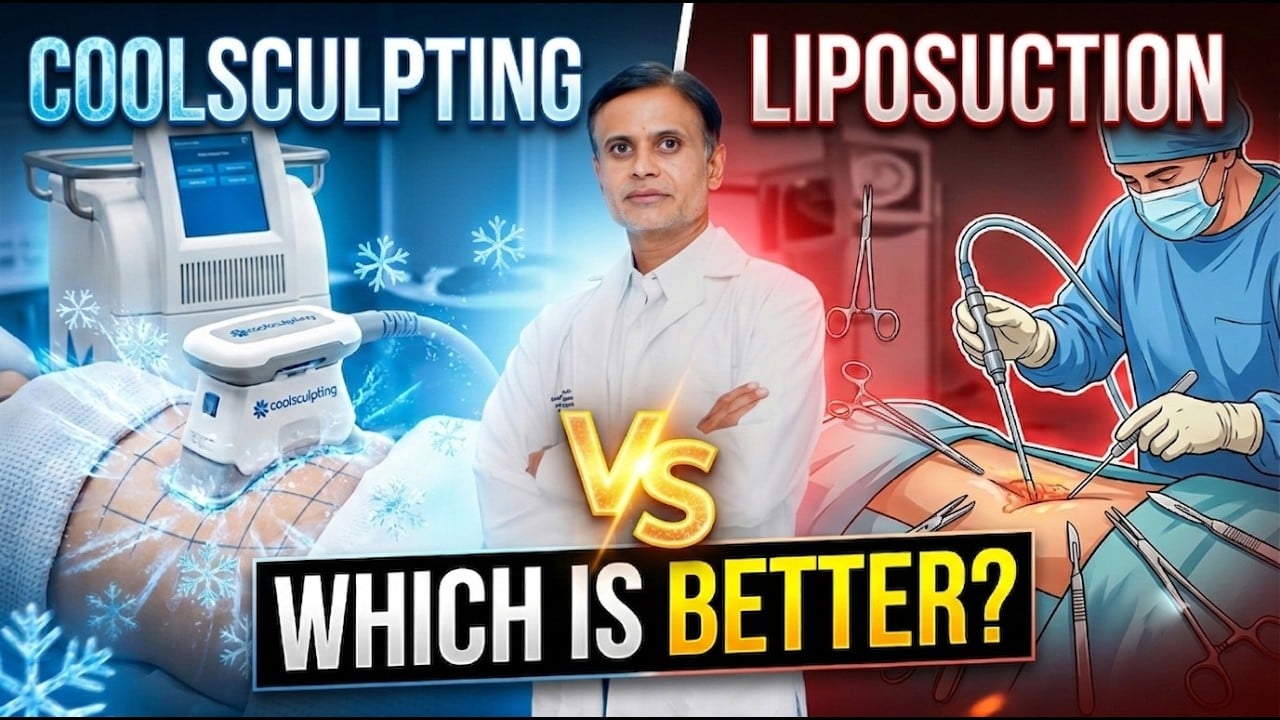
One treatment is not “better” than the other.
The better treatment is the one that matches your body, goals, and expectations.
Patients often ask,
“Doctor, which treatment removes more fat?”
Generally speaking, liposuction removes a significantly larger volume of fat during a single procedure.
Cryolipolysis works differently.
Instead of physically removing fat, it gradually reduces the thickness of the treated fat layer over several weeks as the body naturally clears the affected fat cells.
For someone with a small, localized fat pocket, Cryolipolysis may provide excellent contour improvement.
For someone seeking more dramatic reshaping of the abdomen, flanks, or multiple body areas, liposuction may be the more appropriate option.
The decision should always be based on a clinical evaluation rather than advertisements or before-and-after photos alone.

This is an important point that many patients overlook.
Neither Cryolipolysis nor Liposuction is primarily a skin-tightening treatment.
If significant skin laxity is present after pregnancy or major weight loss, simply removing fat may not fully address the concern.
Depending on the individual case, other treatments may be recommended alongside fat reduction, such as:
Your dermatologist or cosmetic surgeon will recommend the most suitable approach after assessing your skin quality.
One of the biggest advantages of Cryolipolysis is the minimal recovery period.
After treatment, patients may notice:
These effects are usually temporary and improve over several days.
Most people return to work and normal daily activities almost immediately.
Recovery following liposuction is understandably longer because it is a surgical procedure.
Patients may experience:
Compression garments are often recommended to support healing and help optimise body contour.
Depending on the extent of surgery, most patients gradually resume routine activities over the following days to weeks, while strenuous exercise is delayed until approved by the surgeon.
Results develop gradually.
Most patients begin noticing changes after several weeks.
Improvement continues over the next two to three months as the body naturally eliminates treated fat cells.
Some individuals may require additional sessions depending on their treatment goals.
Fat removal is immediate.
However, swelling temporarily hides the final contour.
As healing progresses, body shape becomes increasingly defined.
Final results may continue improving over several months.
Patience is essential regardless of the treatment chosen.
One of the most frequently asked questions is:
“If the fat cells are removed, will they return?”
Both Cryolipolysis and Liposuction permanently reduce the number of fat cells in the treated area.
However, the remaining fat cells can still enlarge if a person gains significant weight.
This means that maintaining a healthy lifestyle remains extremely important after treatment.
Body contouring is not a substitute for balanced nutrition or regular exercise.
Think of these procedures as tools that complement—not replace—a healthy lifestyle.
When performed after proper patient selection and by qualified professionals, both treatments are generally considered safe.
However, every medical procedure has potential risks.
Although uncommon, this possibility should always be discussed before treatment.
Careful surgical planning and appropriate aftercare help minimise these risks.
False.
It is a body contouring procedure designed for localized fat reduction.
False.
Healthy habits remain essential for long-term results.
Not entirely.
Removed fat cells do not regenerate, but the remaining fat cells can enlarge if weight increases significantly.
Not always.
Some patients achieve their goals after one treatment, while others benefit from additional sessions.
Absolutely false.
Many men undergo liposuction for areas such as the abdomen, flanks, chest, and waistline.
Every consultation begins with listening to the patient’s goals.
I then assess:
Only after this assessment do we decide whether:
Ethical patient selection is one of the most important aspects of successful body contouring.
Don’t choose a treatment simply because it is trending on social media.
The best procedure is not the one with the biggest advertisement.
It is the one that matches your body, goals, and expectations.
Some patients value minimal downtime.
Others prioritise dramatic contour improvement.
A personalised consultation helps determine the safest and most effective option for you.
Cryolipolysis is a non-surgical fat reduction treatment using controlled cooling, whereas liposuction is a surgical procedure that physically removes fat.
Liposuction generally removes a larger volume of fat during a single procedure.
Most patients tolerate the procedure well.
Temporary cold sensation, pulling, or mild discomfort may occur during treatment.
The procedure is performed under appropriate anaesthesia.
Post-procedure soreness is expected but is usually manageable with prescribed medication.
Cryolipolysis generally involves much less downtime than liposuction.
Neither treatment is intended for weight loss.
Both are designed for body contouring.
Maintaining a stable weight helps preserve results.
Significant weight gain may enlarge remaining fat cells.
The answer depends on the amount of fat, skin quality, and desired results.
A consultation is essential for appropriate treatment selection.
Its primary purpose is fat reduction, not skin tightening.
Patients with loose skin may benefit from additional treatments.
Most Cryolipolysis patients return immediately.
Recovery after liposuction varies depending on the extent of surgery.
The treated fat cells are permanently reduced, provided a healthy lifestyle is maintained.
Removed fat cells do not return, although weight gain can enlarge the remaining fat cells.
Individuals close to their ideal body weight with localized fat pockets and good skin elasticity.
Patients seeking more substantial body contouring with larger localized fat deposits may be better candidates after medical evaluation.
The answer depends on your body composition, treatment goals, lifestyle, and medical history.
A personalised consultation is the best way to determine the most appropriate treatment.
Body contouring has advanced significantly over the past decade, offering patients both surgical and non-surgical solutions for stubborn fat.
Cryolipolysis offers a convenient, non-invasive option for carefully selected patients who prefer minimal downtime and gradual improvement.
Liposuction remains the gold standard for patients requiring more significant fat removal and body reshaping.
Neither treatment is universally superior.
The best results come from choosing the right procedure for the right patient.
At Derma Solutions, Marathahalli, Bengaluru, my approach focuses on personalised assessment, honest advice, and evidence-based treatment planning to help patients achieve natural, balanced body contours safely.

Written by: Dr. Sandeep Mahapatra
Senior Dermatologist, Hair Transplant Surgeon & Founder – Derma Solutions Skin & Hair Clinic, Bangalore. | Dr. Sandeep Mahapatra is a senior dermatologist and hair transplant surgeon in Bangalore with extensive experience in dermatology, aesthetic treatments and hair restoration. As the founder of Derma Solutions Skin and Hair Clinic – Marathahalli, Bangalore , With extensive experience in aesthetic dermatology, he has performed 50,000+ laser hair removal treatments, 40,000+ chemical peels, 4,000+ Botox procedures, 2,000+ dermal filler treatments, and 3,000+ vitiligo treatments, helping patients achieve safe, natural-looking, and evidence-based skin and facial rejuvenation results.
Medically reviewed by: Dr. Sandeep Mahapatra
Senior Dermatologist & Hair Transplant Surgeon
Date Reviewed: 2026-07-07
This article has been medically reviewed by Dr. Sandeep Mahapatra to ensure Blog Author & Medical Reviewer