
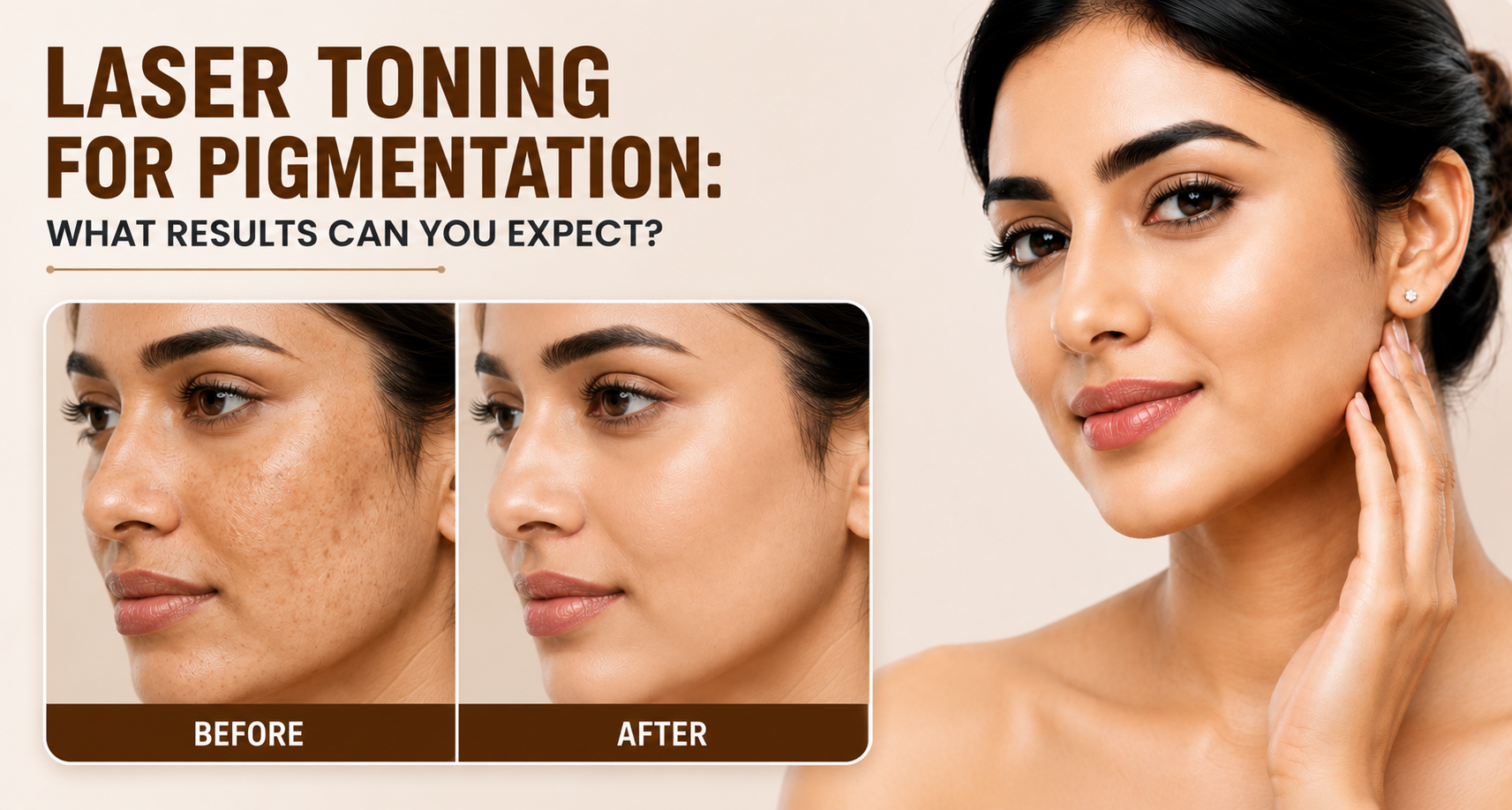
Have you ever looked in the mirror and wondered why those dark patches on your face just won’t fade, no matter how many serums, creams, or home remedies you try?
You’re not alone.
Pigmentation is one of the most common skin concerns I see in my practice at Derma Solutions. From young adults dealing with acne marks to professionals noticing sunspots and uneven skin tone, pigmentation affects people across all age groups and skin types. While it may not be medically dangerous in most cases, it can significantly impact confidence and make the skin appear older, tired, or unhealthy.
The beauty industry is filled with products that promise “instant fairness,” “pigmentation removal in seven days,” or “miracle brightening.” Unfortunately, many of these claims create unrealistic expectations. Pigmentation is often more complex than it appears on the surface, and treating it successfully requires understanding why it developed in the first place.
This is where laser toning has become a popular dermatological treatment. It offers a scientifically backed approach to reducing unwanted pigmentation while improving overall skin tone and texture. However, one of the most common questions patients ask is:
“Will laser toning completely remove my pigmentation?”
The honest answer is that laser toning can provide significant improvement for many people, but the results depend on several factors, including the type of pigmentation, its depth, your skin type, and how well you care for your skin after treatment.
In this article, I’ll explain how laser toning works, what results you can realistically expect, and why choosing the right dermatologist is just as important as choosing the treatment itself.
To understand how laser toning works, it’s important to first understand what pigmentation actually is.
Our skin contains specialised cells called melanocytes. These cells produce melanin, the natural pigment responsible for the colour of our skin, hair, and eyes. Melanin also plays an important protective role by shielding the skin from ultraviolet (UV) radiation.
Normally, melanin is distributed evenly throughout the skin. However, when melanocytes become overactive or are stimulated by certain triggers, they produce excess melanin in specific areas. This results in darker patches or spots, commonly referred to as pigmentation.
Pigmentation can vary in colour, size, and depth. Some spots are light brown and superficial, while others are deeper and more resistant to treatment.
One of the biggest misconceptions is that all pigmentation is the same. In reality, different types of pigmentation require different treatment approaches. A cream that works for post-acne marks may not be effective for melasma, and a treatment suitable for sunspots may not address deeper pigment.
This is why a professional skin assessment is always the first step before recommending laser toning.
Patients often use the term “pigmentation” to describe any dark mark on the skin, but there are several different conditions that fall under this broad category.
This type of pigmentation develops after inflammation or injury to the skin. Acne is one of the most common causes, but eczema, burns, allergic reactions, and even aggressive skin treatments can also leave behind dark marks.
Unlike active acne, these marks are flat and remain after the skin has healed.
Melasma appears as larger brown or greyish patches, usually on the cheeks, forehead, nose, or upper lip. It is commonly associated with hormonal changes, pregnancy, certain medications, and prolonged sun exposure.
Melasma can be particularly challenging because it tends to recur if the underlying triggers are not controlled.
Years of sun exposure can lead to small brown spots that commonly appear on the face, hands, shoulders, and other sun-exposed areas.
These spots often become more noticeable as we age.
Freckles are small pigmented spots that usually become darker with sun exposure. Some people inherit a tendency to develop freckles, while others notice them increasing over time due to UV exposure.
Not all pigmentation appears as distinct spots. Many people experience a dull, patchy complexion caused by uneven melanin distribution, making the skin look tired or older than it actually is.
Understanding the exact type of pigmentation helps determine whether laser toning is likely to be effective or whether a combination of treatments may be more appropriate.
Pigmentation is rarely caused by a single factor. In most cases, multiple internal and external influences work together.
This is by far the most common cause.
Ultraviolet rays stimulate melanocytes to produce more melanin as a protective response. Over months and years, repeated exposure can lead to tanning, sunspots, freckles, and worsening of existing pigmentation.
Even if you spend most of your day indoors, brief periods of sun exposure while commuting or sitting near windows can contribute to pigmentation.
Hormones have a powerful effect on pigment-producing cells.
Pregnancy, oral contraceptive pills, thyroid disorders, and menopause can all trigger melasma, one of the most stubborn forms of facial pigmentation.
Hormonal pigmentation often requires a combination of laser treatment, prescription skincare, and strict sun protection for optimal control.
Many patients feel relieved when their acne clears, only to discover dark marks left behind.
These marks develop because inflammation stimulates melanocytes to produce extra pigment during the healing process.
The more severe the acne, the greater the likelihood of post-inflammatory pigmentation.
Pigmentation can also develop after:
This highlights why treating your skin gently is just as important as treating the pigmentation itself.
As we grow older, years of accumulated sun exposure begin to show on the skin.
Age spots, uneven skin tone, and dullness become increasingly common after the age of 35, especially in individuals who have not consistently used sunscreen.
Some people are naturally more prone to developing pigmentation than others.
If your parents have melasma, freckles, or prominent sunspots, your skin may also be more susceptible.
While genetics cannot be changed, early prevention and timely treatment can make a significant difference.
One of the most common stories I hear from patients is:
“I’ve tried every cream available, but nothing seems to work.”
This is completely understandable.
The skincare market is flooded with products claiming to erase pigmentation quickly. However, pigmentation isn’t just a surface problem.
Many creams only work on the uppermost layer of the skin, while the pigment may be located much deeper.
In addition, many people unknowingly make mistakes that prevent improvement:
Some people also rely heavily on DIY remedies such as lemon juice, baking soda, toothpaste, or harsh scrubs. These may irritate the skin, increase inflammation, and actually worsen pigmentation over time.
The goal should never be to bleach the skin or aggressively remove pigment. Instead, treatment should focus on correcting the underlying process causing excess melanin production while protecting the skin barrier.
This is why professional dermatological treatments often provide more predictable and effective results than self-treatment alone.
Laser toning is a non-invasive dermatological procedure designed to reduce unwanted pigmentation while improving overall skin quality.
Unlike older laser technologies that removed the top layers of skin, laser toning uses carefully controlled, low-energy laser pulses to selectively target excess melanin without significantly damaging the surrounding healthy tissue.
The laser energy is absorbed by the pigment particles, breaking them into tiny fragments. Over the following weeks, your body’s natural immune system gradually clears these fragments, allowing the pigmentation to fade naturally.
In addition to targeting pigment, laser toning also stimulates collagen production, helping improve skin texture, refine pores, and restore a healthier-looking complexion.
One of the reasons laser toning has become so popular is that it offers gradual, natural-looking improvement with minimal downtime. Most patients are able to return to work or their daily activities shortly after treatment.
Laser toning is not a one-size-fits-all treatment. Before recommending any procedure, the first priority is understanding your skin, your medical history, and the underlying cause of your pigmentation.
You may be a good candidate for laser toning if you have:
Many patients who visit Derma Solutions are working professionals who spend long hours outdoors commuting or indoors in air-conditioned environments with frequent exposure to blue light from digital screens. Combined with Bangalore’s climate and increasing pollution, these factors often contribute to uneven skin tone and pigmentation over time.
Laser toning is suitable for both men and women and can be performed on various areas of the body, including the face, neck, hands, and other regions affected by pigmentation.
However, laser toning may not be suitable for everyone. Individuals with active skin infections, certain photosensitive medical conditions, or those who are pregnant may need to postpone treatment or explore alternative options. This is why a detailed consultation is essential before beginning any laser procedure.
One of the biggest concerns among patients is whether laser treatments are safe for Indian skin.
The answer is yes—provided the treatment is performed by an experienced dermatologist using appropriate technology and customised laser settings.
Indian skin contains higher levels of melanin compared to lighter skin tones. While melanin gives our skin natural protection against the sun, it also means that laser treatments must be carefully calibrated. Incorrect laser settings or treatment by inexperienced practitioners may increase the risk of burns, prolonged redness, or post-inflammatory pigmentation.
At Derma Solutions, every laser treatment begins with a comprehensive skin assessment. Factors such as your skin tone, pigmentation type, medical history, and previous treatments are carefully evaluated before selecting the appropriate laser parameters.
This personalised approach allows us to treat pigmentation effectively while prioritising skin safety.
Many patients are understandably anxious before their first laser appointment. Knowing what to expect can make the experience much more comfortable.
The consultation begins with a detailed discussion about:
Your skin is then examined closely to identify the type, depth, and extent of pigmentation.
Clinical photographs may also be taken to help compare your progress over the course of treatment.
Based on your assessment, a customised treatment plan is created.
In some cases, laser toning alone may be sufficient. In others, it may be combined with prescription skincare, chemical peels, oral medications, or other dermatologist-recommended procedures to achieve better results.
Every patient’s skin behaves differently, which is why personalised care produces better outcomes than standardised treatment packages.
Laser toning is a relatively quick outpatient procedure.
Most sessions last between 20 and 40 minutes, depending on the treatment area.
Here’s what typically happens:
The skin is first cleansed to remove makeup, sunscreen, oil, and impurities.
Protective eyewear is provided to shield your eyes from the laser light.
The dermatologist gently moves the laser handpiece across the treatment area.
Patients often describe the sensation as:
The discomfort is generally minimal, and most people tolerate the procedure well without requiring anaesthesia.
Once the laser session is complete, cooling measures and soothing creams may be applied to reduce temporary redness and keep the skin comfortable.
A broad-spectrum sunscreen is then applied before you leave the clinic.
This is one of the most frequently asked questions.
Fortunately, laser toning is considered one of the more comfortable laser procedures available in dermatology.
Most patients report only mild discomfort during treatment.
Unlike more aggressive resurfacing lasers, laser toning uses lower energy levels, making the procedure significantly more tolerable.
Individuals with particularly sensitive skin can discuss additional comfort measures with their dermatologist if needed.
One of the biggest advantages of laser toning is the minimal downtime.
Most patients experience:
These effects usually settle within a few hours and rarely interfere with normal activities.
Many professionals schedule laser toning during their lunch break or after work because they are able to return to their routine almost immediately.
However, while the skin may appear normal externally, it is still healing internally. Following the recommended aftercare is essential for achieving the best possible outcome.
This is perhaps the question patients are most eager to have answered.
Laser toning is not designed to produce dramatic overnight changes.
Instead, it works gradually by allowing your body’s natural processes to clear fragmented melanin while stimulating collagen production beneath the skin.
Although individual results vary, many patients notice the following progression:
Some people observe a subtle improvement in skin brightness and radiance within one to two weeks.
However, significant pigment reduction should not be expected after a single treatment.
Pigmentation often begins to fade more noticeably.
The complexion appears more even, and many patients also report smoother skin texture and a healthier glow.
This is when many patients appreciate the full benefits of treatment.
Dark spots become lighter, overall skin tone becomes more uniform, and collagen stimulation contributes to healthier-looking skin.
Patients frequently comment that their skin looks fresher without appearing artificial or overtreated.
The number of laser sessions depends on several factors, including:
For many patients, a course of six to eight sessions, spaced approximately three to four weeks apart, provides meaningful improvement.
Some individuals may require fewer sessions, while others—particularly those with chronic conditions such as melasma—may benefit from additional maintenance treatments.
The goal is not simply to remove visible pigmentation but also to help maintain healthy skin over the long term.
This is another important topic that deserves an honest answer.
Yes, pigmentation can return.
Laser toning removes existing excess pigment, but it does not permanently stop your melanocytes from producing melanin.
If the original triggers remain, pigmentation may gradually reappear.
Common reasons include:
This is particularly true for melasma, which is considered a chronic condition.
The good news is that recurrence can often be minimised through consistent sun protection, dermatologist-prescribed skincare, and periodic maintenance sessions when appropriate.
Cost is naturally an important consideration for many patients.
Rather than choosing treatment based solely on price, it’s important to consider the value of receiving care from an experienced dermatologist using medical-grade technology.
The total investment depends on several factors:
During your consultation at Derma Solutions, a personalised treatment plan is prepared along with a transparent discussion about the expected number of sessions and associated costs.
This allows patients to make informed decisions based on their individual goals and clinical needs rather than unrealistic promises of instant results.
One of the most important aspects of successful pigmentation treatment is having realistic expectations.
Laser toning is designed to gradually improve pigmentation—not to create an unnaturally perfect complexion overnight.
Patients who achieve the best long-term outcomes are usually those who:
Many patients initially visit us because they want to reduce dark spots or uneven skin tone. Interestingly, one of the most rewarding aspects of laser toning is that the improvements often go beyond pigmentation alone.
Because laser toning stimulates collagen production while targeting excess melanin, patients frequently notice several additional benefits over time.
As unwanted pigment gradually fades, the complexion appears fresher and more uniform. Rather than creating an artificial “whitening” effect, laser toning helps restore your skin’s natural clarity and radiance.
Laser toning encourages gentle collagen remodelling beneath the skin. As collagen production increases, the skin often feels smoother and looks healthier.
Environmental pollution, sun exposure, and daily stress can leave the skin looking tired. Many patients notice that their skin appears brighter and more refreshed after completing a course of laser toning sessions.
Patients often describe their skin as feeling healthier rather than simply lighter. This overall improvement in skin quality is one of the reasons laser toning has become such a popular dermatological treatment.
Unlike more intensive resurfacing procedures, laser toning allows most patients to return to work or their normal routine almost immediately.
For busy professionals, this makes it an attractive treatment option.
Proper preparation can improve both comfort and treatment outcomes.
A few days before your appointment:
Following your dermatologist’s instructions before treatment helps minimise irritation and ensures the skin is in its best possible condition.
One of the biggest misconceptions is that once laser treatment is complete, the pigmentation will never return.
In reality, your post-treatment care plays a major role in determining how long your results last.
This is the single most important step.
Without adequate sun protection, new pigmentation can develop and previously treated pigmentation may return.
Choose a broad-spectrum sunscreen with SPF 30 or higher and reapply it during prolonged outdoor exposure.
Your skin may feel slightly dry or sensitive after treatment.
Using a dermatologist-recommended moisturiser helps support the skin barrier and promotes healing.
For the first 24 to 48 hours, it is generally advisable to avoid:
These precautions reduce unnecessary skin irritation during the initial healing phase.
Laser toning is often only one component of pigmentation management.
Prescription creams, antioxidant serums, pigment-regulating ingredients, or other dermatologist-recommended products may be advised to support and maintain your results.
Pigmentation fades gradually.
Many patients become discouraged because they expect dramatic changes after one session.
Healthy skin takes time to remodel, and meaningful improvement is usually seen over multiple treatments.
When laser toning is performed by an experienced dermatologist using appropriate technology, it is generally considered a safe procedure.
Like any medical treatment, however, there are potential side effects.
These may include:
These effects usually settle within a few hours to a couple of days.
Rare complications may include prolonged pigmentation changes or irritation, particularly if aftercare instructions are not followed or if inappropriate laser settings are used.
This highlights why it is important to undergo treatment at a qualified dermatology clinic rather than choosing laser procedures based solely on cost.
Over the years, I have seen patients unintentionally slow their progress because of avoidable mistakes.
Some of the most common include:
Consistency almost always produces better outcomes than quick fixes.
Successful pigmentation treatment depends on much more than owning an advanced laser machine.
It requires careful diagnosis, personalised treatment planning, and ongoing follow-up.
At Derma Solutions, we believe every patient’s skin is unique.
Our approach begins with understanding not only what type of pigmentation you have, but also why it developed. This enables us to recommend evidence-based treatments tailored specifically to your skin type, lifestyle, and goals.
Patients choose Derma Solutions because we offer:
With clinics conveniently located in Marathahalli and Whitefield, we are committed to providing safe, ethical, and scientifically driven skin care.
Pigmentation can be frustrating, especially when you’ve spent months—or even years—trying products that promise dramatic results but deliver very little.
The good news is that modern dermatology offers effective, evidence-based solutions.
Laser toning has become one of the most trusted treatments for improving pigmentation because it works with your skin’s natural healing processes rather than against them. When performed correctly, it can help create a brighter, more even complexion while also improving overall skin quality.
At the same time, it’s important to remember that no laser can replace healthy skin habits. Daily sunscreen use, a personalised skincare routine, and regular follow-up with your dermatologist remain essential for maintaining your results.
If you’re considering laser toning, don’t base your decision solely on advertisements or discounted packages. Start with an expert evaluation to understand the cause of your pigmentation and the treatment approach that is most appropriate for your skin.
Every skin journey is different, and the best results come from treatments that are customised—not rushed.
If you’re looking for a medically supervised, personalised approach to pigmentation treatment, we invite you to schedule a consultation with Dr. Sandeep Mahapatra at Derma Solutions in Marathahalli or Whitefield, Bangalore.
Together, we can create a treatment plan designed to help you achieve clearer, healthier, and more confident skin.
If pigmentation, uneven skin tone, acne marks, or sunspots are affecting your confidence, don’t rely on guesswork or social media trends.
Visit Derma Solutions for a comprehensive skin evaluation and personalised treatment plan.
📍 Clinics: Marathahalli & Whitefield, Bangalore
📞 Call: +91 97412 23217
🌐 Website: dermasolutions.co.in
Your skin deserves expert care—and every successful treatment begins with the right diagnosis.

Written by: Dr. Sandeep Mahapatra
Senior Dermatologist, Hair Transplant Surgeon & Founder – Derma Solutions Skin & Hair Clinic, Bangalore
Dr. Sandeep Mahapatra is a senior dermatologist and hair transplant surgeon in Bangalore with extensive experience in dermatology, aesthetic treatments and hair restoration. As the founder of Derma Solutions Skin and Hair Clinic – Marathahalli, Bangalore , he has successfully performed over 10,000 hair transplant procedures and regularly guides patients on safe, ethical, and natural-looking hair restoration.
Medically reviewed by: Dr. Sandeep Mahapatra
Senior Dermatologist & Hair Transplant Surgeon
Date Reviewed: 2026-06-17
This article has been medically reviewed by Dr. Sandeep Mahapatra to ensure that the information is clinically accurate, patient-friendly, and aligned with safe dermatological practices. The content is intended for educational purposes and should not replace a personal consultation with a qualified dermatologist.
This article has been medically reviewed by Dr. Sandeep Mahapatra to ensure that the information is clinically accurate, patient-friendly, and aligned with safe dermatological practices. The content is intended for educational purposes and should not replace a personal consultation with a qualified dermatologist.