
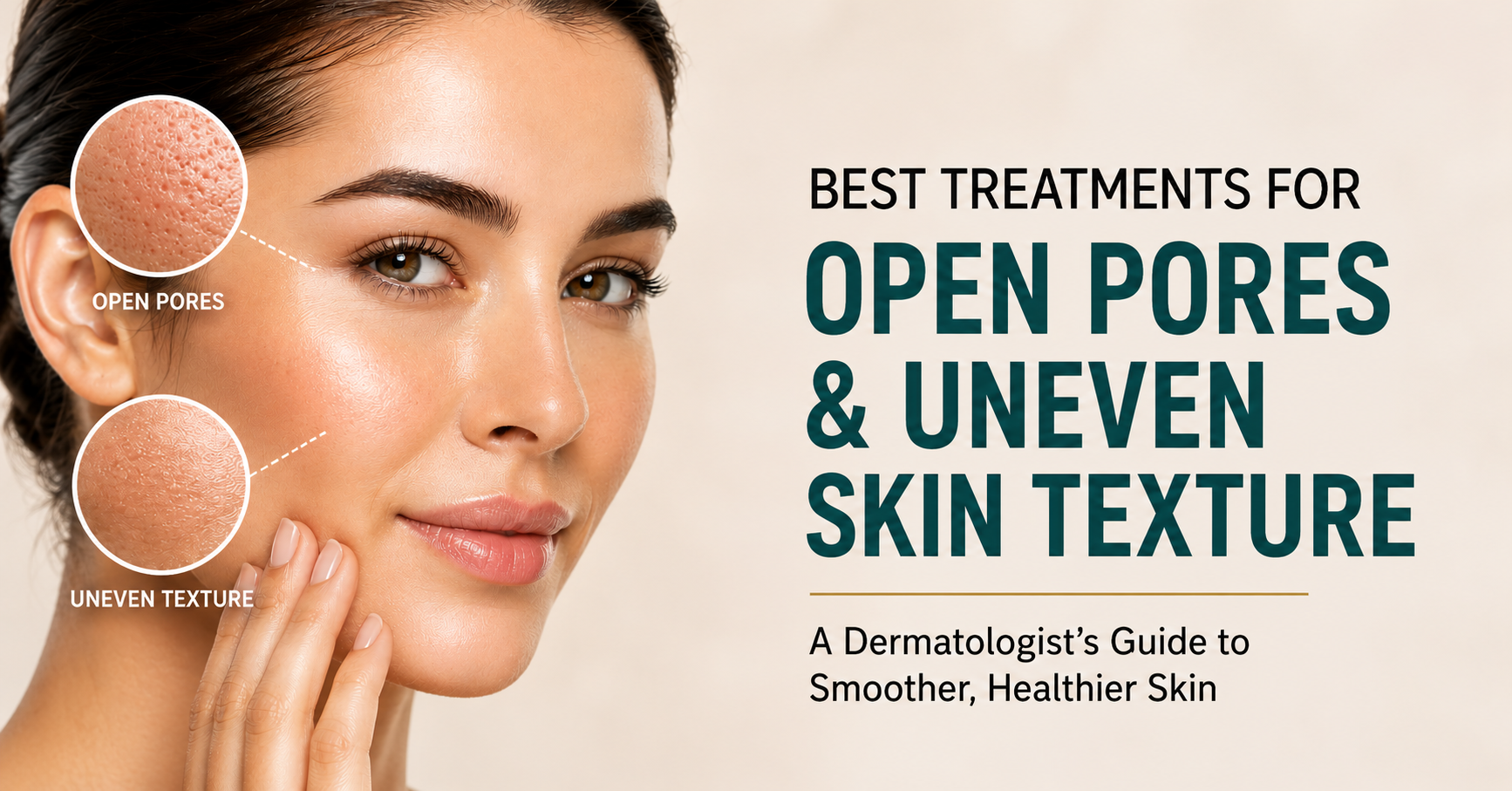
Have you ever looked in the mirror and wished your skin appeared smoother, more refined, and naturally radiant? You’re not alone. Open pores and uneven skin texture are among the most common skin concerns I see in my dermatology practice. While these issues are completely normal and affect people of all ages, they can often make the skin appear dull, rough, or prematurely aged.
Many people spend years trying DIY remedies, expensive skincare products, or viral social media hacks, hoping for flawless skin. Unfortunately, most of these solutions provide only temporary results—or worse, irritate the skin and make the problem more noticeable. The good news is that modern dermatology offers safe, evidence-based treatments that can significantly improve skin texture and reduce the appearance of enlarged pores.
At Derma Solutions, we believe healthy skin begins with understanding the root cause of your concerns rather than simply treating the symptoms. Every patient’s skin is unique, and so is the treatment plan we recommend. Whether your enlarged pores are caused by excess oil production, acne scars, sun damage, or natural ageing, today’s advanced aesthetic treatments can deliver noticeable improvements with minimal downtime.
In this article, I’ll explain why open pores develop, what causes uneven skin texture, and the most effective dermatologist-approved treatments available today. My goal is to help you make informed decisions about your skin instead of relying on myths or quick fixes that rarely work.
Before discussing treatments, it’s important to understand one simple fact: pores cannot actually open or close.
This is perhaps the biggest misconception surrounding skin care.
Pores are tiny openings in your skin that allow sweat and natural oils (sebum) to reach the skin’s surface. Every pore is connected to a hair follicle and sebaceous gland, both of which play an important role in maintaining healthy skin.
When people refer to “open pores,” they are usually talking about pores that have become more visible or enlarged.
Enlarged pores commonly appear on areas with higher oil production, including:
Although enlarged pores are completely harmless from a medical perspective, many individuals seek treatment because they affect the overall appearance and smoothness of the skin.
There isn’t one single cause. Usually, multiple factors work together over time.
One of the most common reasons for enlarged pores is oily skin.
Sebaceous glands naturally produce oil to protect and hydrate the skin. However, when excess oil combines with dead skin cells and impurities, the pore stretches, making it appear larger.
This explains why individuals with oily or combination skin often notice prominent pores even at a younger age.
Collagen acts as the skin’s structural support system.
As we age, collagen and elastin production gradually decline. Without adequate support, the skin surrounding each pore loses firmness, allowing pores to appear larger.
This is why many people notice their pores becoming more visible after their thirties, even if they never had oily skin earlier.
Ultraviolet (UV) rays gradually break down collagen fibres beneath the skin.
Over months and years, this weakens the skin’s structure, making enlarged pores more noticeable.
Daily sunscreen use is one of the simplest ways to slow this process.
Some people naturally inherit larger pores.
If your parents have oily skin or visible pores, there’s a higher chance you’ll experience similar skin characteristics.
While genetics cannot be changed, proper skincare and professional treatments can significantly improve their appearance.
Repeated acne inflammation damages collagen around the hair follicles.
Once acne heals, the surrounding tissue may lose its firmness, leaving enlarged pores and uneven skin texture behind.
Patients with previous severe acne often experience both concerns simultaneously.
Skipping cleansing, sleeping with makeup, excessive exfoliation, or using harsh products can worsen pore visibility over time.
Healthy skin requires balance—not aggressive scrubbing.
Uneven skin texture refers to skin that doesn’t feel or appear smooth.
Instead of reflecting light evenly, textured skin often looks rough, dull, or bumpy.
Common signs include:
While uneven texture isn’t dangerous, it can affect confidence and make makeup sit unevenly on the skin.
Several internal and external factors contribute to rough skin.
Acne often damages deeper layers of skin.
Even after pimples disappear, collagen loss can leave behind depressed scars, enlarged pores, and uneven texture.
Long-term UV exposure accelerates ageing and reduces collagen production.
This causes roughness, pigmentation, fine lines, and reduced skin elasticity.
Our skin naturally sheds dead cells every month.
However, this process slows with age.
When dead cells accumulate on the surface, the skin appears dull and rough.
Professional exfoliating treatments help accelerate healthy skin renewal.
Many people confuse dehydration with dryness.
Even oily skin can become dehydrated.
Without adequate hydration, the skin loses its natural glow and smoothness, making fine lines and texture appear more prominent.
Several everyday habits silently affect skin quality:
Healthy skin reflects overall health.
This is probably the question I hear most frequently in my clinic.
The honest answer is no.
No treatment can permanently close pores because pores are a natural and essential part of your skin.
However, modern dermatology can significantly reduce their appearance by:
When patients understand this distinction, they develop realistic expectations—and are usually delighted with the improvements that professional treatments can achieve.
The internet is full of advice suggesting toothpaste, baking soda, lemon juice, ice cubes, or homemade scrubs for reducing pores.
While some of these methods may temporarily tighten the skin or remove excess oil, none address the actual structural causes of enlarged pores.
In fact, many DIY remedies damage the skin barrier, increase inflammation, and make pores appear even larger over time.
Professional dermatological treatments work differently.
Rather than masking the problem, they target the deeper layers of the skin where collagen is produced. By stimulating natural collagen remodelling, improving cell turnover, and regulating oil production, these treatments create smoother, firmer, and healthier skin over time.
At Derma Solutions, every treatment begins with a detailed skin analysis. Instead of recommending a one-size-fits-all solution, we evaluate factors such as your skin type, age, lifestyle, sun exposure, acne history, and long-term skin goals before designing a personalised treatment plan.
This customised approach not only delivers better results but also ensures the treatment is safe and appropriate for your skin.
Every patient’s skin is different, which is why there is no single “best” treatment. Often, a combination of procedures delivers the most noticeable and long-lasting improvements.
In the next section, I’ll discuss the most effective treatments available today, including Microneedling Radiofrequency (MNRF), Fractional CO₂ Laser, Chemical Peels, HydraFacial, PDRN (Salmon DNA) Therapy, Laser Skin Rejuvenation, and medical-grade skincare, along with who is the ideal candidate for each treatment and what results you can realistically expect.
One of the most effective treatments I frequently recommend at Derma Solutions for enlarged pores, acne scars, and uneven skin texture is Microneedling Radiofrequency (MNRF).
Unlike traditional microneedling, MNRF combines fine insulated needles with radiofrequency energy. The needles create controlled microchannels in the skin while the radiofrequency energy is delivered deep into the dermis. This stimulates collagen and elastin production without causing significant damage to the skin’s surface.
The result is gradual skin remodelling from within.
Patients usually notice brighter, smoother skin after the first session, but the most significant improvements appear gradually over the next three to six months as new collagen forms.
For optimal results, I generally recommend 3–5 sessions, spaced about four to six weeks apart.
For patients with deeper acne scars, severe texture irregularities, or significant sun damage, Fractional CO₂ Laser remains one of the most effective resurfacing procedures available.
This laser creates thousands of microscopic treatment zones in the skin while leaving the surrounding tissue untouched. These tiny columns trigger an intense healing response, stimulating fresh collagen production and replacing damaged skin with healthier tissue.
Because only a fraction of the skin is treated during each session, healing is faster than traditional ablative laser resurfacing.
Some redness and peeling are expected for a few days after treatment, but the long-term improvement in skin quality often makes the downtime worthwhile.
Chemical peels remain one of the simplest yet highly effective treatments for improving skin texture.
These treatments use carefully selected acids to remove damaged outer skin layers, encouraging healthy new skin to replace them.
Depending on your skin type and concerns, your dermatologist may recommend different types of peels.
Contrary to popular belief, chemical peels are not meant to “burn” the skin. When performed by experienced dermatologists, they are controlled, safe, and tailored according to your skin’s sensitivity.
If you’re looking for a treatment with little to no downtime, HydraFacial is an excellent option.
HydraFacial combines cleansing, exfoliation, extraction, hydration, and antioxidant infusion in one session.
Although it doesn’t permanently shrink pores, it removes excess oil and debris that often make pores appear larger.
Patients love HydraFacial because it provides:
Many people choose HydraFacial before weddings, important events, or festivals because the skin looks fresh and radiant immediately after treatment.
One of the latest advances in skin rejuvenation is PDRN (Polydeoxyribonucleotide) Therapy, commonly known as the Salmon DNA Facial.
Rather than simply exfoliating the skin, PDRN works by supporting the skin’s natural repair mechanisms.
It encourages tissue regeneration, improves hydration, reduces inflammation, and enhances collagen production, making it especially beneficial for dull, dehydrated, and ageing skin.
Many patients notice:
At Derma Solutions, PDRN therapy is often combined with treatments like microneedling or laser procedures to maximise skin rejuvenation while reducing recovery time.
Not every patient requires aggressive resurfacing.
For individuals with mild texture concerns, early ageing, or enlarged pores without significant acne scars, non-ablative laser rejuvenation can be an excellent choice.
These lasers gently heat the deeper skin layers without removing the outer skin, encouraging gradual collagen formation.
Advantages include:
Professional treatments deliver excellent results, but maintaining those results depends heavily on your daily skincare routine.
Medical-grade skincare products contain clinically proven ingredients at effective concentrations, helping to support collagen production, regulate oil production, and improve overall skin quality.
Depending on your skin type, your dermatologist may recommend ingredients such as:
Remember, skincare should be customised. Products that work for someone else may not necessarily be suitable for your skin.
Healthy skin is influenced not only by treatments but also by your everyday habits.
Simple lifestyle changes can make a noticeable difference over time.
Daily sunscreen is one of the most effective anti-ageing products available.
Use a broad-spectrum sunscreen with SPF 30 or higher every day, even when indoors or during cloudy weather.
Well-hydrated skin appears healthier, smoother, and more radiant.
Aim to drink adequate water throughout the day while also using moisturisers suited to your skin type.
Your diet influences your skin more than many people realise.
Include foods rich in:
Limiting processed foods and excessive sugar may also help reduce inflammation and support collagen health.
Smoking reduces blood flow to the skin and accelerates collagen breakdown.
This contributes to premature ageing, enlarged pores, and poor wound healing.
Your skin repairs itself while you sleep.
Aim for seven to eight hours of quality sleep each night to support healthy skin renewal.
There is no universal solution for every patient.
Someone with oily skin and enlarged pores may benefit most from MNRF and medical-grade skincare, while another patient with acne scars may require Fractional CO₂ Laser.
Similarly, individuals with dull skin and dehydration may achieve excellent results with HydraFacial and PDRN therapy.
This is why a detailed skin assessment is essential before deciding on any procedure.
At Derma Solutions, I believe every patient deserves a personalised treatment plan rather than a one-size-fits-all approach. During your consultation, we evaluate your skin type, medical history, lifestyle, and treatment goals before recommending the most suitable combination of therapies.
Open pores and uneven skin texture are among the most common concerns I encounter in clinical practice, but they are also some of the most rewarding to treat when approached correctly.
While no treatment can permanently eliminate pores, modern dermatology offers highly effective solutions that significantly improve their appearance, enhance collagen production, and restore smoother, healthier-looking skin.
Consistency is the key. Combining advanced in-clinic procedures with a personalised skincare routine, sun protection, and healthy lifestyle habits delivers results that continue to improve over time.
If you’ve been struggling with enlarged pores, acne scars, rough skin, or dullness, don’t rely solely on internet trends or home remedies. A professional evaluation can identify the underlying cause and help you choose treatments that are both safe and effective.
At Derma Solutions, my goal is to help every patient achieve naturally healthy, confident skin through scientifically proven treatments tailored to their individual needs. With the right approach, smoother skin is not just a possibility—it’s an achievable reality.

Written by: Dr. Sandeep Mahapatra
Senior Dermatologist, Hair Transplant Surgeon & Founder – Derma Solutions Skin & Hair Clinic, Bangalore
Dr. Sandeep Mahapatra is a senior dermatologist and hair transplant surgeon in Bangalore with extensive experience in dermatology, aesthetic treatments and hair restoration. As the founder of Derma Solutions Skin and Hair Clinic – Marathahalli, Bangalore , he has successfully performed over 10,000 hair transplant procedures and regularly guides patients on safe, ethical, and natural-looking hair restoration.
Medically reviewed by: Dr. Sandeep Mahapatra
Senior Dermatologist & Hair Transplant Surgeon
Date Reviewed: 2026-06-17
This article has been medically reviewed by Dr. Sandeep Mahapatra to ensure that the information is clinically accurate, patient-friendly, and aligned with safe dermatological practices. The content is intended for educational purposes and should not replace a personal consultation with a qualified dermatologist.
This article has been medically reviewed by Dr. Sandeep Mahapatra to ensure that the information is clinically accurate, patient-friendly, and aligned with safe dermatological practices. The content is intended for educational purposes and should not replace a personal consultation with a qualified dermatologist.
Reference Sources
American Academy of Dermatology (AAD) – Treat Large Facial Pores
https://www.aad.org/public/everyday-care/skin-care-secrets/face/treat-large-pores
American Academy of Dermatology (AAD) – Acne Scars: Diagnosis and Treatment
https://www.aad.org/public/diseases/acne/derm-treat/scars
American Academy of Dermatology (AAD) – Cosmetic Treatments and Procedures
https://www.aad.org/public/cosmetic
American Society for Dermatologic Surgery (ASDS) – Laser Skin Resurfacing
https://www.asds.net/skin-experts/skin-treatments/laser-resurfacing
American Society for Dermatologic Surgery (ASDS) – Chemical Peels
https://www.asds.net/skin-experts/skin-treatments/chemical-peels