Table of Contents
The field of aesthetic dermatology has evolved tremendously over the past decade. Earlier, cosmetic treatments mainly focused on reducing wrinkles or adding facial volume. Today, the emphasis has shifted toward skin regeneration—helping the skin repair itself naturally from within.
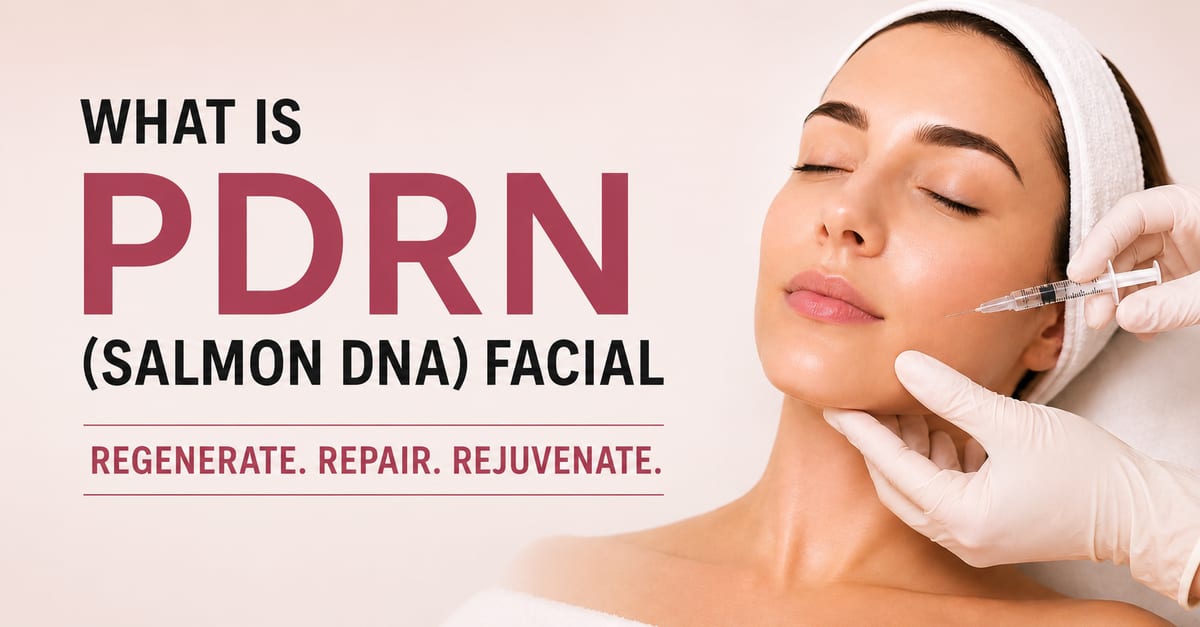
One treatment that has gained significant attention worldwide is PDRN therapy, commonly known as the Salmon DNA Facial.
Many patients visit my clinic after hearing about this treatment on social media or from celebrities. Naturally, they have several questions:
“Is Salmon DNA really extracted from fish?”
“Will it make me look younger?”
“Is it better than PRP or skin boosters?”
“Who should undergo this treatment?”
As an MD Dermatologist, I believe patients should understand the science behind every cosmetic procedure before deciding whether it is suitable for them.
The truth is that PDRN is not a miracle treatment, nor is it a replacement for every anti-aging procedure. Instead, it is an advanced regenerative treatment that helps repair damaged skin, improve hydration, stimulate collagen production, and enhance overall skin quality.
When recommended for the right patient, PDRN therapy can produce healthy, natural-looking skin rejuvenation without altering facial features.
In this guide, I’ll explain everything you need to know about PDRN therapy, how it works, its benefits, and who is most likely to benefit from it.
What Is PDRN?
PDRN stands for Polydeoxyribonucleotide.
Although the name sounds complex, the concept is relatively simple.
PDRN is a purified DNA fragment obtained from salmon species, particularly salmon sperm cells. The DNA is highly purified through specialized pharmaceutical processes to ensure safety and biocompatibility before it is used in medical and aesthetic treatments.
The reason salmon DNA is used is because its molecular structure is remarkably similar to human DNA, making it highly compatible with human tissues.
Rather than functioning as a filler, PDRN acts as a biostimulator, encouraging your skin to repair itself naturally.
This regenerative property has made PDRN popular not only in cosmetic dermatology but also in wound healing, tissue repair, orthopedics, and regenerative medicine.
Why Is It Called the Salmon DNA Facial?
Many patients are surprised—or even amused—when they hear the term “Salmon Sperm Facial.”
While the name has become popular in the media, it often creates unnecessary confusion.
The treatment does not involve raw salmon sperm being applied to the skin.
Instead, purified DNA molecules extracted through advanced pharmaceutical techniques are incorporated into injectable formulations designed specifically for medical use.
Once purified, these DNA fragments stimulate cellular repair and skin regeneration.
So, despite the nickname, the treatment is actually a sophisticated regenerative dermatology procedure based on scientific research.
How Does PDRN Work?
Healthy skin constantly repairs itself.
As we age, this natural repair process gradually slows down.
Factors such as:
- Sun exposure
- Pollution
- Stress
- Smoking
- Poor nutrition
- Aging
- Hormonal changes
all reduce the skin’s ability to regenerate efficiently.
PDRN helps reactivate these repair mechanisms.
When injected into the skin, PDRN works by stimulating specific cellular pathways involved in tissue regeneration.
This encourages:
- Fibroblast activation
- New collagen production
- Improved blood circulation
- Tissue repair
- Cellular regeneration
Instead of simply masking signs of aging, PDRN helps improve the skin’s biological function.
This is one reason why regenerative treatments are becoming increasingly popular—they work with the body’s own healing processes.
What Happens to the Skin After PDRN Treatment?
Following treatment, the skin gradually undergoes several positive changes.
These include:
Increased Collagen Production
Collagen provides structure and firmness to the skin.
As collagen levels increase, the skin becomes smoother, firmer, and more elastic.
Better Hydration
PDRN improves the skin’s ability to retain moisture.
Patients often notice healthier, more hydrated skin within a few weeks.
Improved Skin Texture
Damaged skin gradually becomes smoother with improved cellular turnover.
Enhanced Elasticity
As collagen and elastin production improves, skin appears firmer and more resilient.
Reduction in Fine Lines
Rather than filling wrinkles, PDRN helps improve skin quality, making fine lines appear softer over time.
Healthier Skin Barrier
A stronger skin barrier means better protection against environmental damage and reduced moisture loss.
Is PDRN the Same as a Skin Booster?
This is one of the most common misconceptions.
Although both are injectable treatments that improve skin quality, PDRN and skin boosters are not the same.
Skin Boosters
Skin boosters primarily deliver hyaluronic acid into the skin to improve hydration and elasticity.
Their main function is to replenish moisture.
PDRN
PDRN focuses on regeneration and tissue repair.
Rather than simply hydrating the skin, it stimulates the body’s natural healing processes.
Think of it this way:
A skin booster gives your skin hydration.
PDRN encourages your skin to become healthier from within.
In some patients, both treatments may even be combined for enhanced results.
What Are the Benefits of PDRN Therapy?
One reason PDRN has become increasingly popular is that it addresses several aspects of skin aging simultaneously.
Some of the key benefits include:
- Improved skin hydration
- Better skin elasticity
- Brighter complexion
- Enhanced collagen production
- Reduction in fine lines
- Improved skin texture
- Faster skin healing
- Reduction in dullness
- Better skin quality
- Healthier-looking skin
Because the improvements occur gradually, the results tend to appear natural rather than artificial.
Patients often receive compliments such as:
“You look well-rested.”
“Your skin looks healthier.”
“You seem to be glowing.”
without people realizing they have undergone an aesthetic treatment.
Who Can Consider PDRN Therapy?
PDRN is suitable for a wide range of patients.
It is particularly beneficial for individuals experiencing:
Early Signs of Aging
Fine lines, reduced elasticity, and dullness often respond well to regenerative treatments.
Dry or Dehydrated Skin
Patients with chronically dry skin may notice significant improvement in hydration.
Uneven Skin Texture
PDRN can improve roughness and enhance overall smoothness.
Sun-Damaged Skin
Chronic sun exposure accelerates collagen breakdown.
PDRN helps support skin repair and rejuvenation.
Patients Seeking Natural Rejuvenation
Individuals who want healthier-looking skin without changing facial shape often prefer regenerative treatments like PDRN.
Post-Laser Recovery
Many dermatologists also incorporate PDRN following procedures such as laser resurfacing or microneedling to support healing and tissue regeneration.
Who May Not Be an Ideal Candidate?
Although PDRN is considered safe for many individuals, it may not be suitable for everyone.
Treatment may need to be postponed or avoided in patients with:
- Active skin infections
- Active acne breakouts in the treatment area
- Certain autoimmune skin disorders
- Pregnancy or breastfeeding (depending on clinical judgment)
- Known allergies to product ingredients
A detailed consultation is always necessary before recommending any injectable treatment.
What Happens During the Procedure?
The treatment itself is relatively straightforward.
The skin is first cleansed thoroughly.
A topical numbing cream is usually applied to improve comfort.
Using fine needles or specialized injection techniques, small amounts of PDRN are delivered into the superficial layers of the skin.
The procedure generally takes around 30 to 45 minutes, depending on the treatment area.
Patients can usually return home shortly afterward with minimal downtime.
Is the Treatment Painful?
Most patients tolerate PDRN treatment very well.
Because numbing cream is applied before the procedure, discomfort is usually minimal.
Some patients describe the sensation as:
- Tiny pinpricks
- Mild pressure
- Slight stinging
These sensations are temporary and well tolerated by most individuals.
What Is the Recovery Like After PDRN Therapy?
One of the biggest advantages of PDRN therapy is that it requires minimal downtime.
Unlike more aggressive procedures such as ablative laser resurfacing, PDRN works by stimulating regeneration rather than creating controlled injury to the skin.
Immediately after treatment, patients may notice:
- Mild redness
- Tiny injection marks
- Slight swelling
- Mild tenderness
These effects are temporary and usually settle within 24 to 48 hours.
Most patients are able to return to work or resume their normal daily activities the same day or the following morning.
To ensure optimal healing, I usually recommend:
- Avoid touching or rubbing the treated area unnecessarily.
- Avoid makeup for at least 12–24 hours.
- Stay well hydrated.
- Apply sunscreen regularly.
- Avoid excessive heat, steam rooms, or strenuous exercise for the first 24 hours.
- Follow the skincare routine recommended by your dermatologist.
Good post-treatment care plays an important role in achieving the best possible outcome.
How Many Sessions Are Needed?
Many patients expect dramatic improvement after a single treatment.
While some individuals notice an early improvement in hydration and skin texture after one session, regenerative treatments work gradually.
Most patients benefit from:
- Three to four treatment sessions
- Performed approximately three to four weeks apart
After completing the initial course, maintenance sessions every six to twelve months may help preserve results, depending on your skin condition and aging process.
The exact treatment schedule varies from patient to patient.
When Will You See Results?
Unlike dermal fillers, which provide immediate volume, PDRN relies on your skin’s natural healing mechanisms.
Because collagen remodeling takes time, results develop progressively.
Most patients notice:
Within the First Week
- Improved hydration
- Fresher appearance
- Mild increase in skin radiance
After Two to Four Weeks
- Better skin texture
- Healthier-looking skin
- Improved elasticity
After Several Weeks
As collagen production continues, patients often experience:
- Firmer skin
- Reduction in fine lines
- Improved skin tone
- Increased skin resilience
The gradual nature of the results is one reason why PDRN produces such natural-looking rejuvenation.
Is PDRN Safe?
Safety is naturally one of the biggest concerns for anyone considering injectable treatments.
When performed by an experienced MD Dermatologist using approved medical-grade products, PDRN has an excellent safety profile.
The purified DNA fragments used in aesthetic medicine undergo stringent processing to ensure they are suitable for human use.
Before recommending treatment, I carefully assess:
- Medical history
- Current medications
- Allergies
- Skin condition
- Previous cosmetic procedures
- Individual treatment goals
This detailed consultation allows us to determine whether PDRN is appropriate for each patient.
Are There Any Side Effects?
Like any injectable procedure, PDRN therapy may cause temporary side effects.
Fortunately, they are generally mild and self-limiting.
Possible side effects include:
- Mild redness
- Swelling
- Bruising
- Tenderness
- Temporary sensitivity
These symptoms usually resolve within a few days.
Serious complications are uncommon when treatment is performed under proper medical supervision using approved products.
Can PDRN Be Combined with Other Treatments?
Absolutely.
One of the reasons I appreciate regenerative dermatology is that treatments can often complement one another.
Depending on the patient’s concerns, PDRN may be combined with:
Microneedling
Microneedling creates controlled microchannels in the skin, allowing PDRN to support faster healing and collagen stimulation.
MNRF (Microneedling Radiofrequency)
Combining MNRF with PDRN may improve acne scars, skin texture, and overall skin rejuvenation.
Fractional CO₂ Laser
Following laser resurfacing, PDRN can support tissue repair and improve recovery.
Skin Boosters
While skin boosters primarily improve hydration, PDRN focuses on regeneration.
The combination may provide healthier, more radiant skin.
PRP Therapy
In selected patients, PRP and PDRN may be incorporated into comprehensive regenerative treatment plans.
The ideal combination depends on your skin condition and treatment goals.
PDRN vs PRP: What Is the Difference?
Patients frequently ask whether they should choose PRP or PDRN.
Although both are regenerative treatments, they work differently.
PRP (Platelet-Rich Plasma)
PRP is prepared from the patient’s own blood.
It contains platelets and naturally occurring growth factors that stimulate healing.
PDRN
PDRN uses purified DNA fragments that stimulate tissue repair and collagen production through different biological pathways.
Both treatments have their own advantages.
The decision depends on:
- Skin condition
- Medical history
- Treatment objectives
- Previous procedures
In some situations, they may even be used together as part of a personalized rejuvenation plan.
PDRN vs Skin Boosters
This is another common point of confusion.
Although both treatments improve skin quality, they are designed for different purposes.
| Feature | PDRN Therapy | Skin Boosters |
|---|---|---|
| Primary Action | Tissue regeneration | Deep hydration |
| Main Ingredient | Polydeoxyribonucleotide (PDRN) | Hyaluronic Acid |
| Main Benefit | Cellular repair and collagen stimulation | Moisture and skin glow |
| Skin Hydration | Moderate | Excellent |
| Collagen Stimulation | Excellent | Moderate |
| Best For | Regeneration and repair | Dry, dehydrated skin |
| Results | Gradual and regenerative | Hydrating and refreshing |
Rather than asking which treatment is superior, the more appropriate question is which treatment best addresses your specific skin concerns.
Who Is Most Likely to Benefit from PDRN?
In my practice, PDRN is often recommended for patients who wish to improve overall skin quality without dramatically changing their facial appearance.
Ideal candidates include individuals with:
- Early signs of aging
- Fine lines
- Dull skin
- Mild skin laxity
- Uneven skin texture
- Dehydrated skin
- Sun-damaged skin
- Skin recovering from aesthetic procedures
Patients seeking natural, subtle rejuvenation often appreciate the gradual improvement that PDRN provides.
Frequently Asked Questions
Is the Salmon DNA Facial painful?
Most patients tolerate the treatment well after topical numbing cream is applied. Only mild discomfort is usually experienced.
Can men undergo PDRN therapy?
Absolutely.
Healthy skin is important regardless of gender, and an increasing number of men are choosing regenerative skin treatments.
Will my face look different?
No.
PDRN does not alter facial shape or create volume.
Instead, it improves the quality and health of the skin itself.
Is PDRN suitable for younger patients?
Yes.
Many patients in their late twenties and thirties choose PDRN as a preventive treatment to maintain healthy skin before significant aging develops.
Can PDRN remove deep wrinkles?
PDRN can improve fine lines by enhancing collagen production and skin quality.
However, deeper wrinkles may require additional treatments such as dermal fillers, energy-based devices, or combination therapy.
My Approach to PDRN Therapy
As a dermatologist, I believe cosmetic treatments should never be selected simply because they are trending on social media.
Every patient’s skin is different.
During consultation, I evaluate:
- Skin quality
- Degree of aging
- Lifestyle
- Medical history
- Previous treatments
- Individual expectations
Only then do I recommend whether PDRN is the most suitable option—or whether another treatment may provide better results.
My goal is always to improve the health of the skin while maintaining completely natural-looking outcomes.
Final Thoughts
PDRN therapy, commonly known as the Salmon DNA Facial, represents an exciting advancement in regenerative dermatology.
Rather than masking the signs of aging, it encourages the skin to repair and rejuvenate itself naturally by stimulating collagen production and improving cellular regeneration.
Although it is not a replacement for treatments such as dermal fillers, skin boosters, or laser procedures, it can play an important role in a comprehensive skin rejuvenation plan.
The key is understanding that no single treatment is ideal for every individual.
A personalized consultation with an experienced MD Dermatologist is essential to determine whether PDRN is the right choice for your skin.
When carefully selected and appropriately performed, PDRN therapy can help patients achieve healthier, brighter, firmer, and naturally rejuvenated skin.
Reference Sources for PDRN (Salmon DNA) Facial
- American Academy of Dermatology (AAD) – Cosmetic Treatments and Procedures
https://www.aad.org/public/cosmetic - American Society for Dermatologic Surgery (ASDS) – Skin Rejuvenation Treatments
https://www.asds.net/skin-experts/skin-treatments - National Center for Biotechnology Information (NCBI) – Polynucleotides in Aesthetic Medicine: A Review of Current Evidence
https://pmc.ncbi.nlm.nih.gov/articles/PMC11311621/ - National Center for Biotechnology Information (NCBI) – Polydeoxyribonucleotide: Biological Activities and Clinical Applications in Dermatology
https://pmc.ncbi.nlm.nih.gov/articles/PMC8037940/ - National Center for Biotechnology Information (NCBI) – Polydeoxyribonucleotide: A Promising Biological Platform to Accelerate Impaired Skin Wound Healing
https://pmc.ncbi.nlm.nih.gov/articles/PMC8658589/