
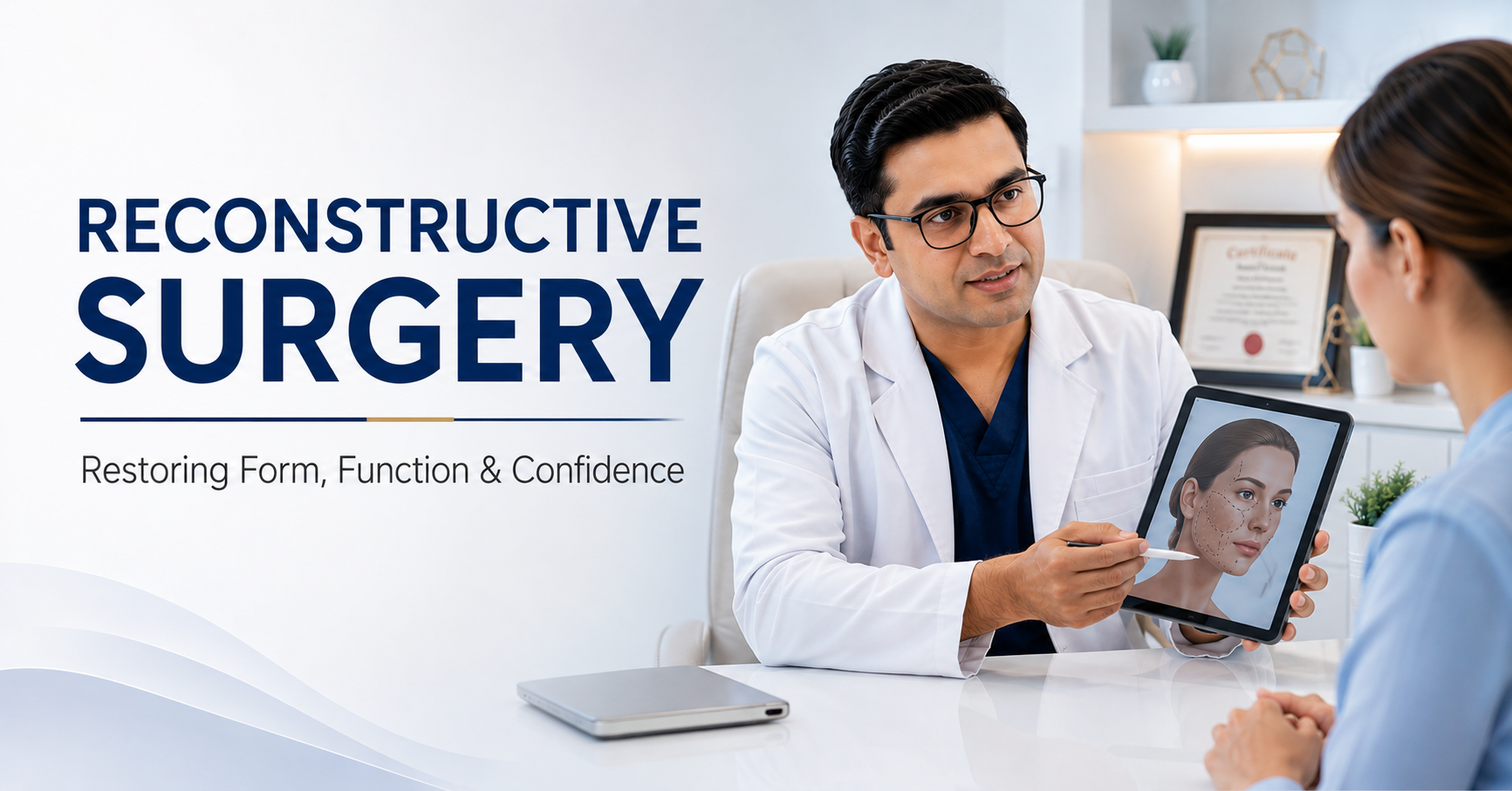
Reconstructive surgery is one of the most meaningful branches of plastic surgery. While cosmetic surgery focuses on enhancing appearance, reconstructive surgery is performed to restore normal form and function after trauma, cancer, burns, congenital conditions, or severe infections. Beyond physical healing, reconstructive procedures help individuals regain confidence, improve mobility, and return to their daily lives with dignity.
At Derma Solutions, we understand that every reconstructive journey is deeply personal. Whether it involves repairing a facial injury, reconstructing the breast after cancer surgery, treating burn scars, or restoring damaged tissue, our goal is always the same—to help patients heal physically and emotionally through safe, evidence-based surgical care.
As a plastic and reconstructive surgeon, I believe that reconstructive surgery is not merely about repairing defects; it is about restoring lives.
Reconstructive surgery is a specialized field of plastic surgery aimed at correcting abnormalities caused by:
Unlike cosmetic procedures, reconstructive surgeries are often medically necessary because they improve function while simultaneously enhancing appearance.
For many patients, reconstructive surgery helps restore:
Every reconstructive procedure is carefully planned according to the patient’s medical condition, age, lifestyle, and long-term functional goals.
Many people assume reconstructive surgery is only required after major accidents. In reality, reconstructive procedures benefit patients across all age groups.
Common candidates include individuals with:
Road traffic accidents, sports injuries, workplace trauma, and fractures may damage facial bones, skin, muscles, and nerves.
Burns often lead to scar contractures that restrict movement and affect appearance.
After removal of skin cancers, reconstructive surgery restores missing tissue while preserving facial symmetry.
Women undergoing mastectomy often choose breast reconstruction to restore body image and emotional well-being.
Children born with cleft lip, cleft palate, ear deformities, or hand abnormalities benefit greatly from reconstructive surgery.
Complex tendon injuries, nerve injuries, fractures, and amputations often require microsurgical reconstruction.
Patients with diabetes, pressure sores, or vascular diseases may require tissue reconstruction for wound healing.
Many people confuse reconstructive surgery with cosmetic surgery.
| Reconstructive Surgery | Cosmetic Surgery |
|---|---|
| Restores function | Enhances appearance |
| Medically indicated | Elective procedure |
| Repairs defects | Improves aesthetics |
| Often covered by insurance (depending on policy) | Usually self-funded |
| Performed after disease or injury | Performed on healthy structures |
Although both procedures require similar surgical expertise, their objectives differ significantly.
Facial trauma can affect appearance, breathing, chewing, and speech.
Reconstructive procedures include:
Advanced surgical techniques help restore both facial aesthetics and function.
Breast reconstruction is commonly performed following breast cancer surgery.
Options include:
Every treatment plan is personalized based on cancer treatment, body type, and patient preferences.
The goal is not only to recreate the breast but also to support emotional recovery after cancer treatment.
Burn injuries often leave severe scars that limit mobility and cause emotional distress.
Procedures may involve:
Early intervention often improves long-term functional outcomes.
Scars cannot always be completely removed, but they can often be significantly improved.
Scar revision may help:
Treatment options may include:
The most appropriate treatment depends on scar type, location, and skin quality.
Skin grafting replaces damaged or missing skin using healthy skin harvested from another part of the body.
It is commonly used for:
Skin grafts promote healing while protecting underlying tissues.
Unlike skin grafts, flap surgery transfers skin, fat, muscle, or bone along with its blood supply.
Flap reconstruction is often necessary for:
This technique provides durable tissue coverage with excellent healing potential.
The hand contains intricate nerves, tendons, muscles, and blood vessels.
Hand reconstruction may involve:
The primary objective is restoring grip strength, dexterity, and daily function.
Patients who are bedridden or wheelchair-dependent may develop deep pressure ulcers.
Reconstructive surgery helps by:
These procedures significantly improve quality of life.
Plastic surgery has evolved tremendously over the past decade.
Today’s reconstructive procedures incorporate:
Tiny blood vessels and nerves are repaired under high-powered microscopes.
Microsurgery is commonly used for:
A balloon-like device gradually stretches healthy skin before reconstruction.
This provides skin with a similar color and texture for optimal cosmetic outcomes.
Purified fat from another body area is injected into reconstructed tissues.
Benefits include:
Modern lasers improve:
Laser therapy is often combined with surgery for superior results.
During the consultation, we discuss:
Clinical examination and imaging may also be required.
Every patient receives an individualized treatment plan.
Factors considered include:
Depending on complexity, procedures may be performed under:
Duration ranges from one hour to several hours.
Recovery varies according to the procedure performed.
Patients receive detailed instructions regarding:
Physiotherapy may also be recommended in selected cases.
Although recovery differs for every procedure, a general guide includes:
Week 1–2
Weeks 3–6
2–6 Months
Up to 1 Year
Patience is essential, as healing occurs gradually.
Successful reconstructive surgery can provide:
The impact often extends far beyond physical healing.
All surgeries result in some scarring. However, plastic surgeons carefully place incisions and use advanced closure techniques to minimize visible scars. Scar care treatments can further improve their appearance.
Some discomfort is expected after surgery, but it is generally well controlled with medications. Most patients notice steady improvement within the first few weeks.
In many cases, yes. While outcomes depend on the extent of the injury or condition, reconstructive surgery is designed to improve function as much as possible, alongside restoring appearance.
Recovery varies with the procedure. Minor surgeries may heal within a few weeks, while complex reconstructions can take several months for full recovery.
Some patients achieve their goals with a single operation, while others—particularly those with burns, extensive trauma, or cancer-related defects—may benefit from staged procedures for the best long-term result.
At Derma Solutions, we believe reconstructive surgery requires more than technical skill—it demands careful planning, empathy, and a patient-centered approach. Every treatment plan is tailored to restore both function and appearance while prioritizing long-term health and quality of life.
Patients choose us because we offer:
Written by: Dr. Sandeep Mahapatra
Senior Dermatologist, Hair Transplant Surgeon & Founder – Derma Solutions Skin & Hair Clinic, Bangalore
Dr. Sandeep Mahapatra is a senior dermatologist and hair transplant surgeon in Bangalore with extensive experience in dermatology, aesthetic treatments and hair restoration. As the founder of Derma Solutions Skin and Hair Clinic – Marathahalli, Bangalore , he has successfully performed over 10,000 hair transplant procedures and regularly guides patients on safe, ethical, and natural-looking hair restoration.
Medically reviewed by: Dr. Sandeep Mahapatra
Senior Dermatologist & Hair Transplant Surgeon
Date Reviewed: 2026-06-17
This article has been medically reviewed by Dr. Sandeep Mahapatra to ensure that the information is clinically accurate, patient-friendly, and aligned with safe dermatological practices. The content is intended for educational purposes and should not replace a personal consultation with a qualified dermatologist.
This article has been medically reviewed by Dr. Sandeep Mahapatra to ensure that the information is clinically accurate, patient-friendly, and aligned with safe dermatological practices. The content is intended for educational purposes and should not replace a personal consultation with a qualified dermatologist.